
Moving day leaves behind more trash than most households expect. Flattened boxes, torn bubble wrap, and half-used rolls of tape can add up to several hundred pounds of waste from a single relocation across the District, Northern Virginia, or suburban Maryland. Families arranging service with a local moving company in Virginia don’t have to accept that outcome as inevitable. With a little planning, most packing supplies can be sourced secondhand, reused across several moves, and recycled correctly once their job is done.
Sustainability now shapes buying decisions well beyond the moving industry, and the trend is measurable. Roughly 54% of U.S. consumers say they deliberately choose products with sustainable packaging when the option is available, and about 71% consider eco-friendly packaging important to their purchasing decisions overall. That mindset carries over into how people relocate, especially in a market where residential movers in Virginia, Maryland and DC serve everything from studio apartments in Arlington to five-bedroom homes in Loudoun County, each generating a different volume of packing waste.
The DMV adds a layer of complexity that a lot of moving guides skip over: recycling rules are not uniform across the region. A flattened box that goes straight into a blue curbside bin in Fairfax County may need to be dropped at a transfer station in parts of Prince George’s County, and DC’s rules differ again. Sourcing and disposing of materials correctly means understanding not just what’s recyclable, but where.
Where to Source Packing Materials Before the Move
Full-service crews see this firsthand on nearly every job. For a closer look at how a regional provider handles packing and material planning day to day, Top Notch Pro Movers has service pages covering the range of moves the DMV market typically needs.
The cheapest and greenest box is one that already exists. Grocery stores, liquor stores, and office supply retailers routinely break down large quantities of sturdy corrugated boxes daily and are usually glad to hand them over instead of paying to have them hauled away. Neighborhood swap groups, community Buy Nothing pages, and local classifieds are another reliable source, particularly right after a wave of closings on new homes in a given subdivision.
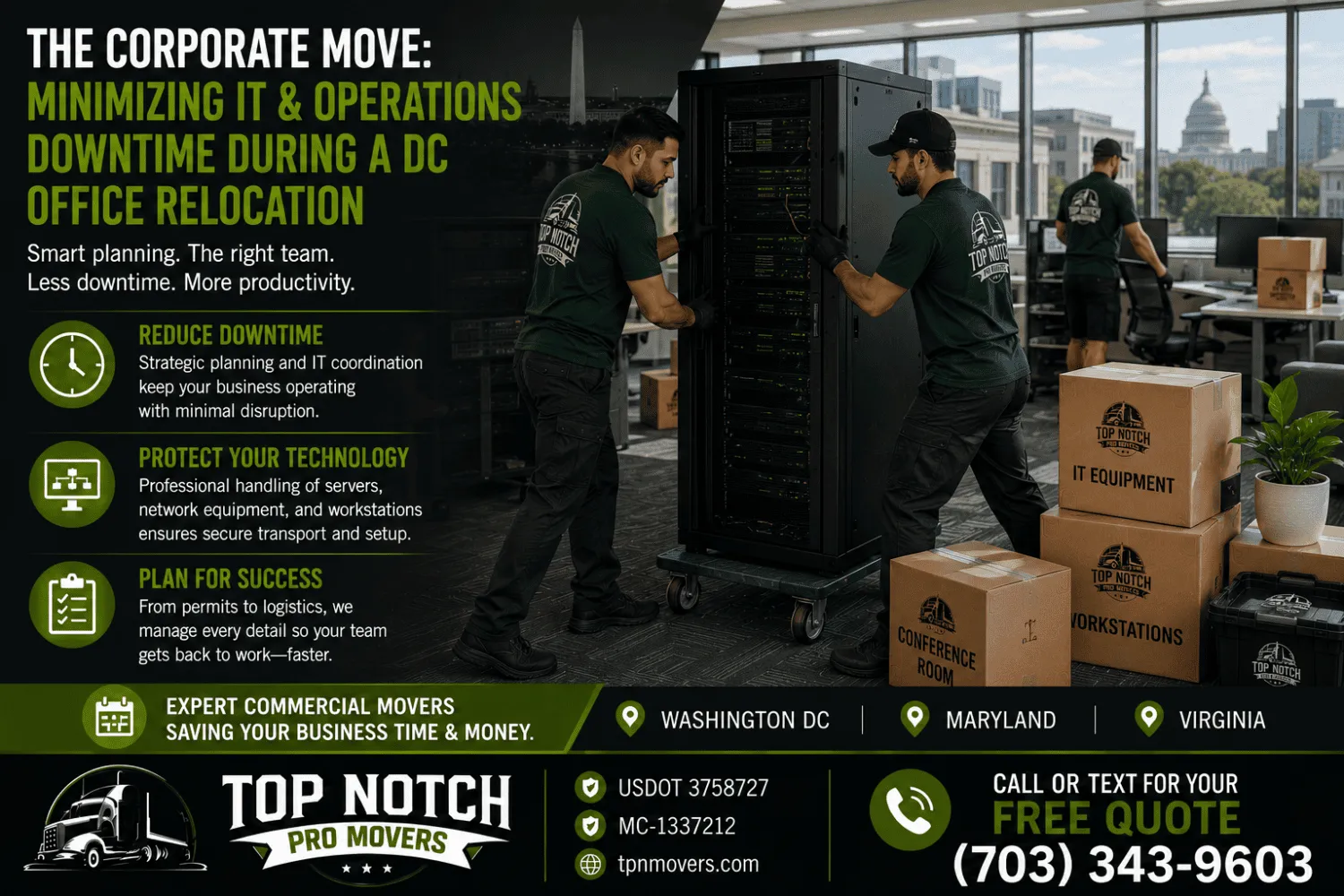
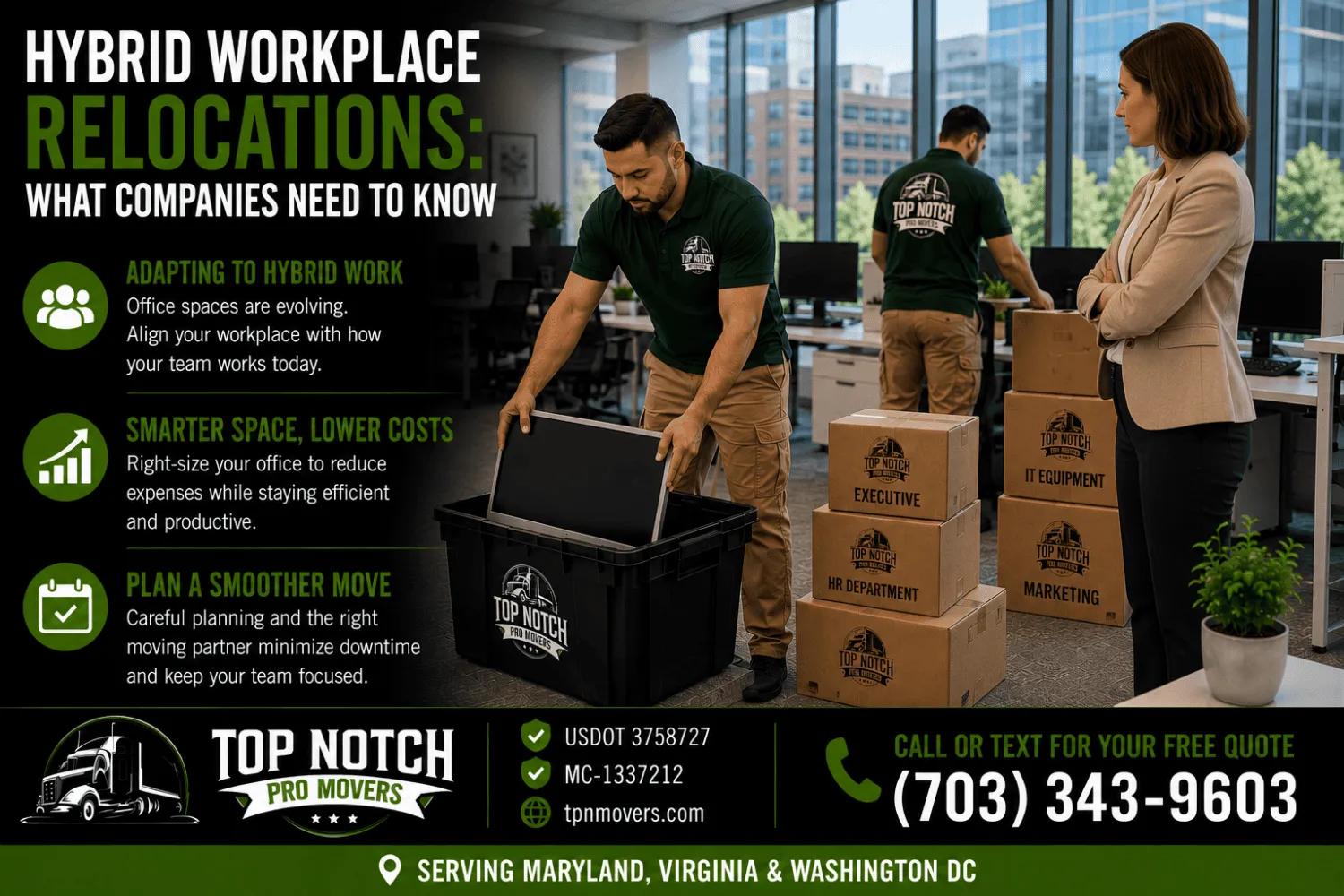
Businesses relocating offices face a different math problem. A commercial moving company in Virginia, Maryland and DC is often handling dozens of workstations at once, and buying new boxes for each one adds real cost on top of the environmental impact. Many offices already have supply closets stocked with file boxes and packing paper left over from previous projects, and reusable plastic crates rented specifically for the move can replace hundreds of cardboard boxes that would otherwise be discarded within a week.
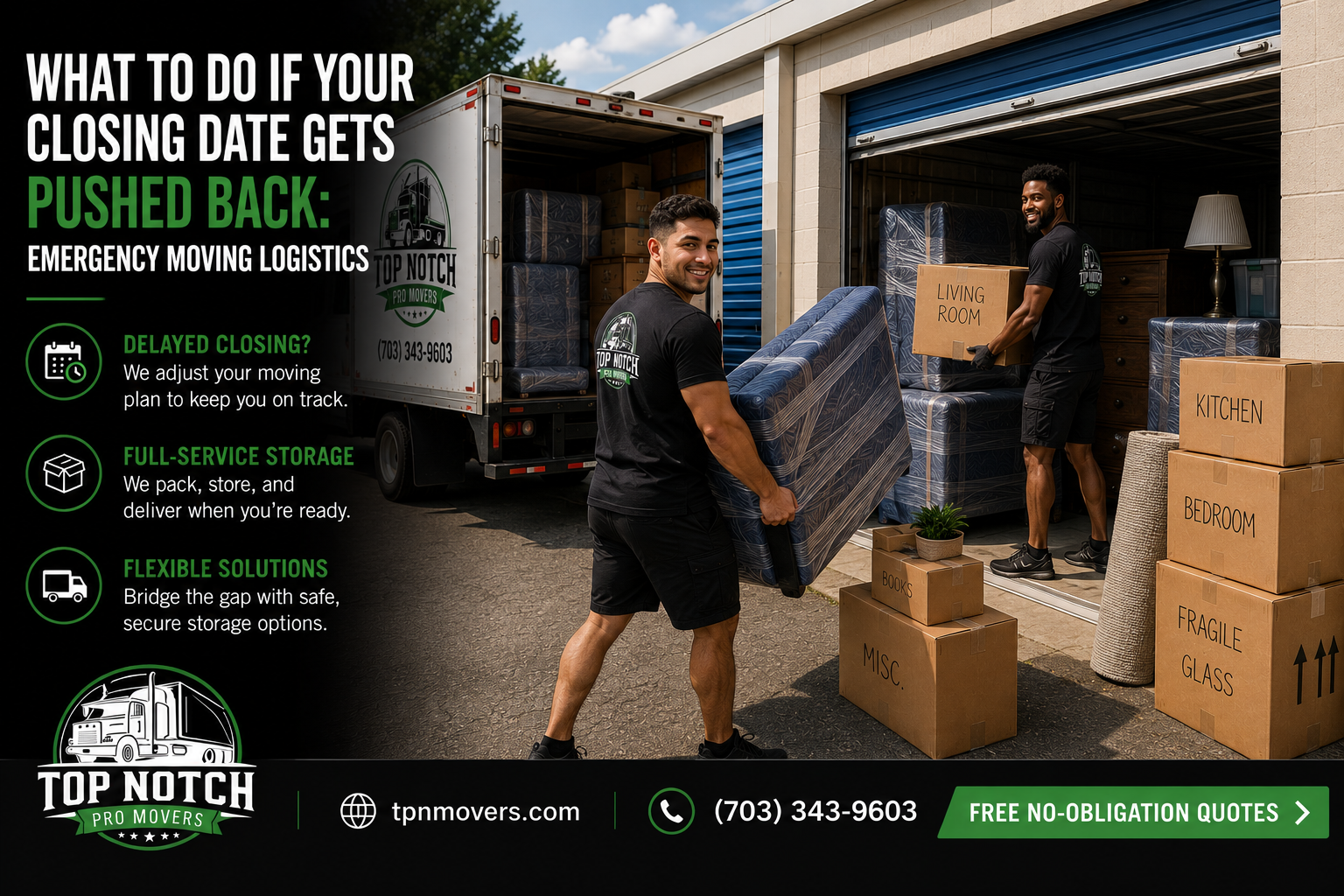
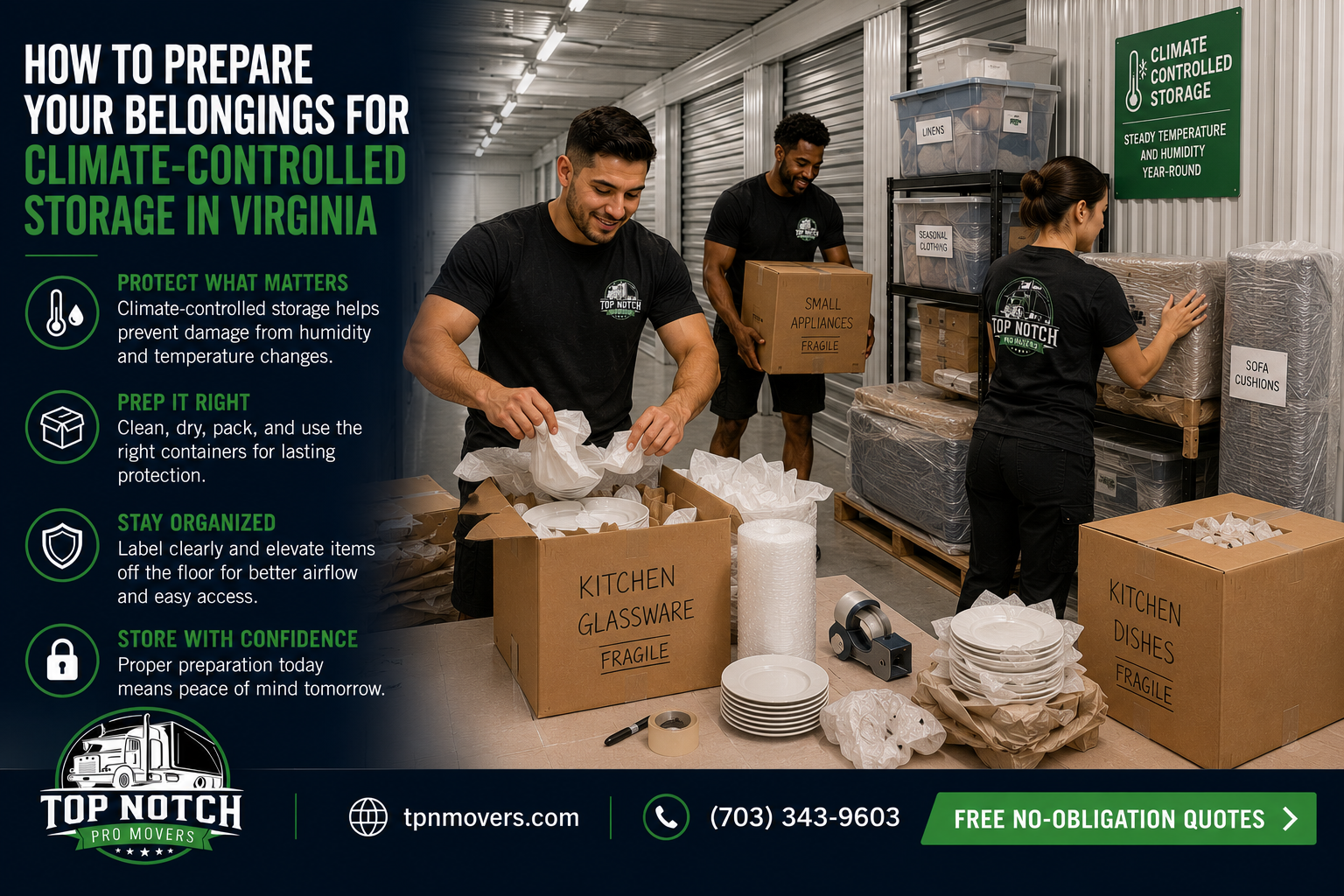
Households transitioning between homes over a longer window sometimes find it more efficient to rely on Storage Solutions rather than repeatedly buying and discarding boxes. Keeping belongings in reusable bins inside a storage unit, rather than boxing and unboxing multiple times, cuts down on both material waste and the labor of repacking.
Comparing Common Packing Materials
The right material depends on what’s being packed and how far it needs to travel. Here’s how the most common options stack up:
| Material | Sustainability | Typical Cost | Best For |
|---|---|---|---|
| New corrugated boxes | Moderate — recyclable but resource-intensive to produce | $1.50–$4 per box | Fragile or heavy items needing consistent strength |
| Used/recycled boxes | High — diverts existing material from disposal | Free–$1 per box | Books, kitchenware, general household goods |
| Rented plastic crates | High — reused hundreds of times before retirement | $1–$3 per crate/week | Local moves and repeat customers |
| Bubble wrap / foam | Low — rarely accepted in curbside recycling | $10–$25 per roll | Glassware, electronics, artwork |
| Packing paper / newsprint | High — biodegradable and widely recyclable | $15–$30 per bundle | Dishes, small breakables, void fill |
| Moving blankets/pads | High — reusable indefinitely | Often included with movers | Furniture, mirrors, appliances |
What Happens to Packing Materials After the Move
Once boxes are unpacked, the disposal decision matters as much as the sourcing one. Fairfax County requires cardboard and mixed paper recycling for both residential and commercial properties, and boxes need to be broken down flat and kept clean and dry to be accepted. Grease, food residue, and excess tape are common contamination culprits that can send an otherwise recyclable load to the landfill instead. Nationally, containers and packaging still account for roughly 28% of the municipal solid waste stream, and cardboard alone contributes tens of millions of tons a year — a meaningful share of it avoidable with better sorting habits.
Furniture pads, blankets, and shrink wrap deserve separate handling. Movers handling furniture moving in Virginia typically use quilted moving blankets instead of disposable shrink wrap specifically because the blankets get reused on every job rather than thrown away after one use. Homeowners packing furniture themselves can borrow or rent blankets rather than buying rolls of plastic wrap that has almost no recycling value curbside.
DMV Recycling Quick Reference
| Jurisdiction | Cardboard Curbside? | Notes |
|---|---|---|
| Fairfax County, VA | Yes | Must be flattened, clean, and dry; mandatory for businesses |
| Arlington County, VA | Yes | Single-stream; large volumes should be cut to fit the bin |
| Washington, DC | Yes | DPW single-stream program; oversized loads may need scheduling |
| Montgomery County, MD | Yes | Curbside plus drop-off centers for bulk cardboard |
| Prince George’s County, MD | Varies | Some areas require drop-off at a transfer station |
Matching Materials to the Type of Move
The distance and scale of a move should influence material choices. Long distance moving in Virginia, Maryland and DC generally calls for sturdier, double-walled boxes and more cushioning material than a move across town, since items spend more time in transit and change hands more often. Reused boxes are still viable for long-distance jobs, but they should be inspected for structural weakness before being loaded onto a truck.
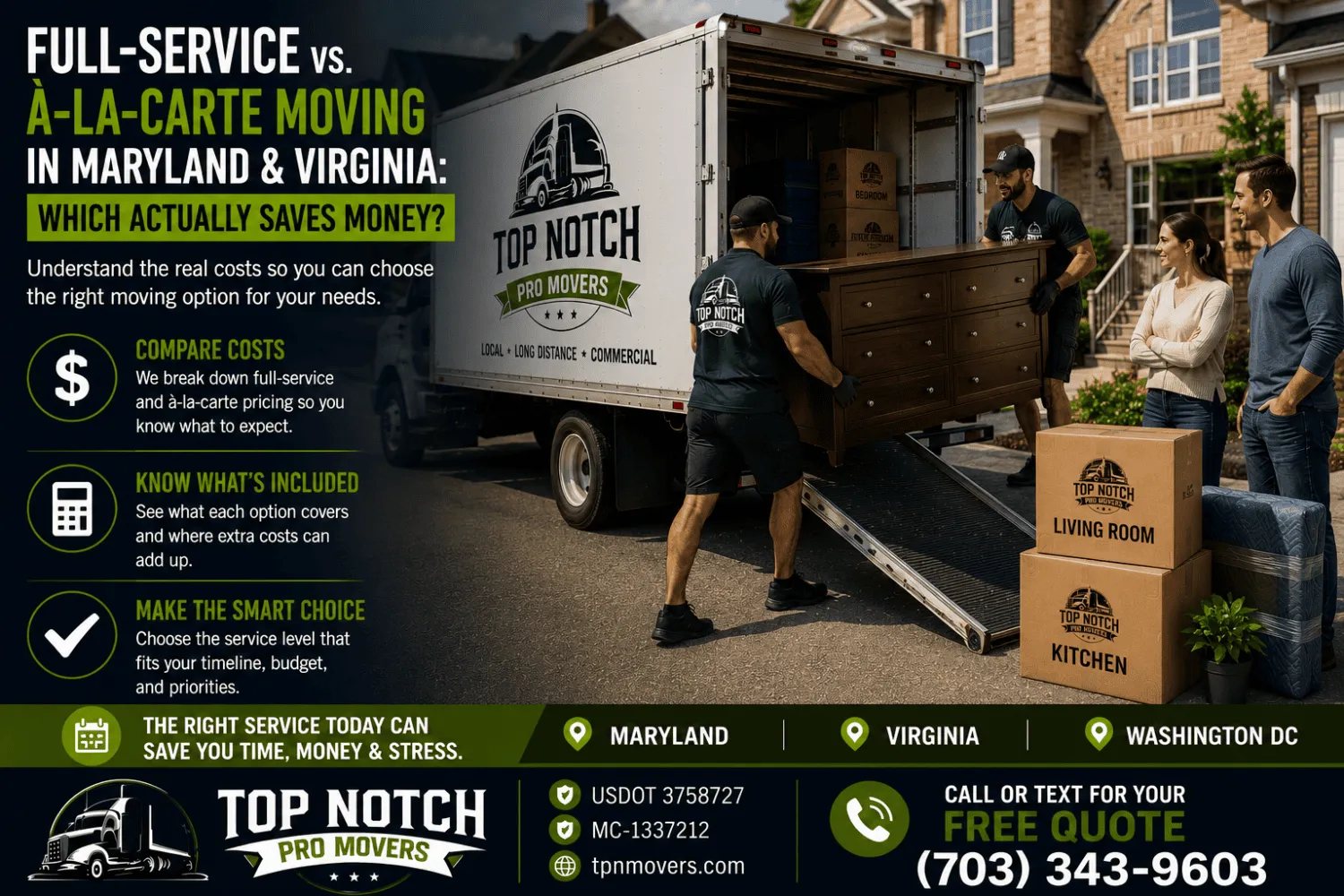
Households that already own boxes and simply need help with the heavy lifting are a growing segment of the market. Labor only moving services are a natural fit for anyone who has already sourced and packed their own recycled materials and just needs a crew to load, carry, and unload — an arrangement that keeps material costs low since no new supplies are purchased through the move itself.
Common Mistakes to Avoid
A few habits undercut otherwise good intentions. Buying more new boxes than a home actually needs is the most common one — most moves are overestimated by a box count of 15% to 20%. Packing peanuts and loose foam are rarely accepted by curbside programs and often end up in the trash regardless of the box they came in. And boxes left assembled rather than broken down take up several times the space in a recycling bin, which sometimes causes haulers to skip them altogether.
Expert Tips for a Lower-Waste Move
Start sourcing materials two to three weeks before the move date rather than the weekend before, since free boxes tend to disappear quickly once a moving date is set. Ask neighbors who moved recently if they still have flattened boxes in the garage. Weigh the cost of rented reusable crates against the cost of buying and discarding new boxes — for larger households, the math often favors the rental. And confirm local pickup rules before move week, since collection schedules can shift around holidays common to relocation season.
Frequently Asked Questions
Can moving boxes with tape still be recycled?
Yes, in most DMV jurisdictions. Packing tape doesn’t need to be removed before recycling — recycling facilities separate it out during processing. Heavy layers of tape or shipping labels covering most of the box surface can slow that process, so it’s worth trimming excess where practical.
Are packing peanuts recyclable in Virginia, Maryland, or DC?
Generally no, not through curbside programs. Loose foam peanuts are considered a contaminant by most single-stream facilities. Some shipping stores accept clean peanuts for reuse, so it’s worth calling ahead before assuming they belong in the trash.
Is it better to buy new boxes or source used ones?
Used boxes are the more sustainable choice as long as they’re structurally sound. A box that has been through two or three moves without visible creasing or water damage is usually fine for another round, particularly for lighter household items.
What should I do with bubble wrap and shrink wrap after unpacking?
Most curbside programs don’t accept plastic film. Many grocery stores have a plastic film drop-off bin near the entrance that accepts clean bubble wrap and shrink wrap alongside plastic bags, which keeps it out of the landfill stream.
Do moving companies in the DMV offer eco-friendly packing options?
Many do, in varying forms — reusable crate rentals, moving blankets in place of shrink wrap, and take-back programs for used boxes are increasingly common across the region as demand for lower-waste moving has grown.
Final Thoughts
Eco-friendly moving in the DMV isn’t about buying a different set of expensive supplies — it’s about sourcing smarter and disposing of materials with the region’s specific recycling rules in mind. Crews at Top Notch Pro Movers regularly see how much waste a household can avoid simply by reusing blankets, sourcing boxes secondhand, and sorting materials correctly once the unpacking is done. Whether the job is a small apartment move or a full office relocation, the habits that reduce material waste tend to be the same ones that make the move itself go more smoothly. For homeowners and businesses across Northern Virginia weighing their options, Top Notch Pro Movers’ crews have handled enough of these moves to know that the greenest supply is usually the one already sitting in someone’s garage. Anyone comparing local providers can review services directly through Top Notch Pro Movers to see how sourcing and materials are handled on a typical job.