
Washington’s weather doesn’t check the calendar before it checks a moving schedule. The District and its surrounding Virginia and Maryland suburbs see measurable rainfall on well over 100 days a year, and a fair number of those days land on a Saturday, which is when most residential moves happen. Anyone working with a local moving company in Dc during the wetter months eventually runs into the same problem: how do you get furniture in and out of a home without ruining the floors underneath it?
Hardwood and carpet are two of the most expensive surfaces to repair after move-day damage, and wet conditions make both more vulnerable. Water tracked in on boots softens wood finishes, and mud ground into carpet fibers rarely comes out with a quick vacuum. Local providers like Top Notch Pro Movers see this pattern every spring and late summer, when the DMV’s rainiest stretches overlap with peak moving season.
The good news is that floor damage from a rainy move is almost entirely preventable with the right prep. It just takes planning that starts before the truck ever pulls up, whether the job is a single-family home or one of the many condos and townhomes that residential movers in DC handle across Arlington, Alexandria, and the District each year.
Why Rain Complicates a DC-Area Move
Washington averages roughly 40 inches of rain a year, spread across around 115 to 120 days with measurable precipitation, according to long-term NOAA climate normals. June and August tend to bring the heaviest single-day totals, often as sudden thunderstorms rather than steady all-day rain — which is exactly the kind of weather that catches a move crew off guard mid-load. Humidity compounds the issue. Wood flooring absorbs moisture from wet shoes and damp furniture pads faster in the DMV’s humid subtropical climate than it would in a drier region, so even a light drizzle can leave a visible watermark if it isn’t wiped down promptly.
Protecting Hardwood Floors Before the Truck Arrives
The best defense is a clean, dry path from the door to every room being loaded or unloaded. Ram board, red rosin paper, and adhesive floor film are the standard options professional crews use, and each has trade-offs in wet weather — rosin paper alone tends to tear and buckle once it’s saturated, while ram board holds up under repeated foot traffic and heavier gear. Crews handling furniture moving in DC will often double up protection at entryways and stairwells specifically, since those areas take the brunt of tracked-in water and see the highest volume of trips back and forth.
Furniture sliders help too, but only on a dry, protected surface — sliding a couch across wet hardwood without a barrier underneath can grind grit into the finish and leave scratches that weren’t there an hour earlier. A simple boot-removal or shoe-cover policy at the door, enforced from the first box to the last, prevents a surprising share of the damage that shows up in move-day claims.
Comparing Floor Protection Materials for Wet Conditions
| Material | Water Resistance | Best Use | Watch-Outs |
|---|---|---|---|
| Ram board | High | Entryways, hallways, high-traffic paths | Bulkier to transport and store between jobs |
| Red rosin paper | Low | Dry-weather protection, light interior rooms | Tears and buckles once saturated |
| Adhesive floor film | Moderate | Hardwood and tile, short-term coverage | Can leave residue if left down too long |
| Old towels/moving blankets | Moderate | Quick entryway mats, doorframes | Need frequent wringing out and swapping |
| Carpet film/masking | High | Carpeted stairs and hallways | Must be applied to clean, dry carpet first |
Protecting Carpets During a Wet Move
Carpet doesn’t scratch or dent the way hardwood does, but it holds onto moisture and dirt far longer. Mud tracked across a hallway on a rainy day works its way into the fibers and padding, and once it dries, it becomes much harder to extract than if it had been caught while still wet. Self-adhesive carpet film applied to clean, dry carpet before move day creates a barrier that can be peeled up and disposed of afterward, taking most of the tracked-in debris with it. Vacuuming the carpet immediately before the move — not after — also reduces how much loose dirt is available to grind in during heavy foot traffic.
Businesses and Long-Distance Moves Face Their Own Weather Risk
Weather timing matters for more than single-family homes. A commercial moving company in DC coordinating an office move on a rainy weekend has to protect lobby flooring and elevator lobbies that see far more foot traffic than a residential hallway, often across polished stone or commercial-grade carpet tile that shows water spots quickly. Building management in DC’s commercial corridors frequently requires proof of floor protection before granting a certificate of insurance for the move, which makes this less a nice-to-have and more a contractual requirement.
Weather also factors into scheduling for a long-distance moving job in DC, where a truck loaded during a downpour in the DMV might unload several states away in dry conditions, or vice versa. Crews on longer hauls tend to over-prepare for wet loading regardless of the forecast at the destination, since a soaked pad or wet cardboard packed into a truck can cause mildew issues days later.
When Floors Need Time to Dry or Refinish
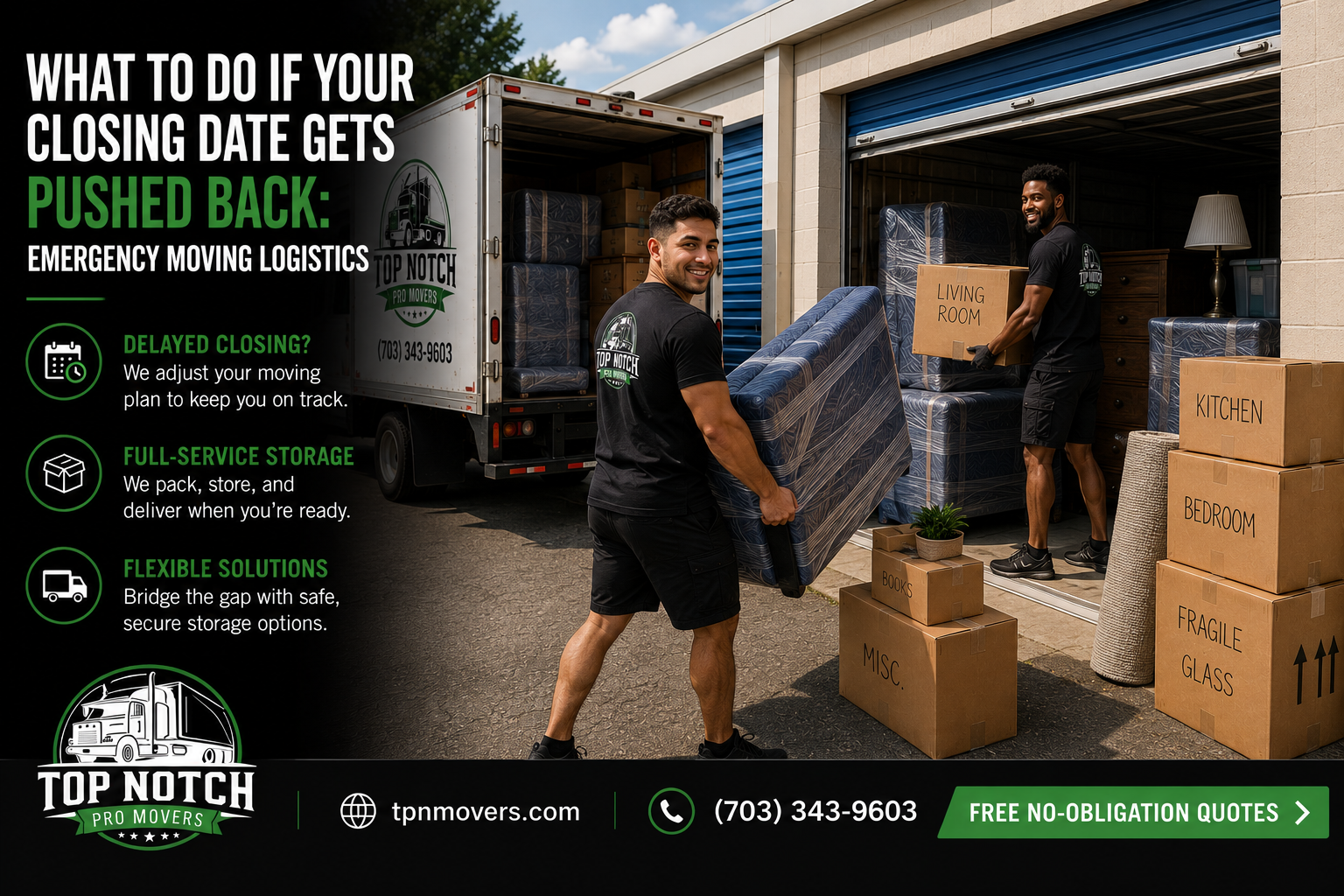
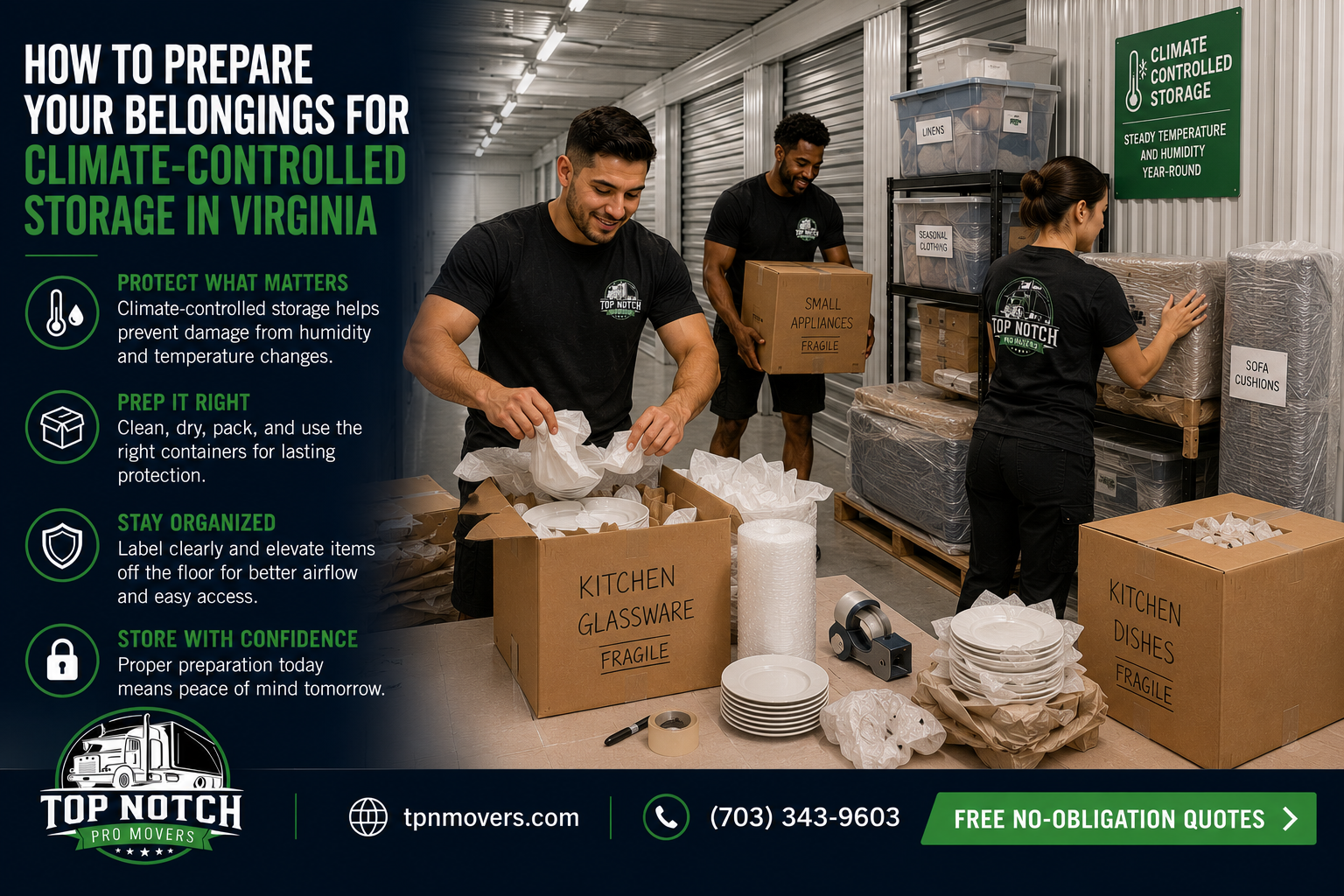
Sometimes the smarter move is not moving furniture back in immediately. Homeowners refinishing hardwood after water exposure, or waiting on a carpet cleaning before move-in, often lean on Storage Solutions to hold belongings for a week or two rather than setting everything down on floors that haven’t fully cured. It’s a small delay that avoids a much larger repair bill later.
For households that already own their packing supplies and floor protection materials and just need extra hands, Labor only moving crews can still apply the same wet-weather precautions — laying protection, using sliders, and managing the door path — without the added cost of a full-service package.
DC Rainy Season Quick Reference
| Month | Avg. Rainy Days | Typical Pattern |
|---|---|---|
| May | 10–11 | Steady spring rain, moderate totals |
| June | 12 | Wettest month; frequent thunderstorms |
| August | 14–15 | Highest monthly rainfall total, sudden downpours |
| September | 9 | Tropical remnants possible; humid |
| November | 8 | Lightest rainy month of the fall |
Common Mistakes to Avoid
The most frequent misstep is protecting only the rooms being packed and skipping the hallway or entry stretch that every trip passes through twice. A close second is leaving cardboard boxes stacked directly on carpet or hardwood during a rain delay, which traps moisture underneath and can leave a mark within an hour. And postponing a move date at the first sign of rain often isn’t necessary — DC’s rainy season rarely produces all-day downpours, so a short weather window between showers is usually enough to load a truck safely with the right prep in place.
Expert Tips for Moving in Wet Weather
Check the hourly forecast the morning of the move rather than the five-day outlook, since DC summer storms are often brief and localized. Keep a stack of dry towels near the entry point specifically for wiping down door handles, stair rails, and equipment. Pack electronics and cardboard boxes last so they spend the least time exposed near an open door. And walk the path from truck to front door once before loading begins, noting any spots — a threshold, a rug edge, a tile transition — that tend to collect water.
Frequently Asked Questions
Will professional movers reschedule for rain?
Rarely, unless the forecast calls for severe weather like high winds or lightning that makes loading unsafe. Ordinary rain is manageable with standard floor protection and doesn’t usually require a schedule change.
How long should floor protection stay down after the move?
Most crews leave protective paper or film in place until the last item is through the door, then remove it the same day. Leaving adhesive film down for more than 24 to 48 hours can make it harder to peel up cleanly.
Can water stains on hardwood be fixed after a move?
Light surface staining can often be buffed out or treated with a wood-safe cleaner if caught early. Deeper staining that’s soaked into the wood grain usually requires sanding and refinishing the affected boards.
Is carpet or hardwood more at risk during a rainy move?
Hardwood shows damage faster — scuffs and water rings are visible almost immediately. Carpet damage tends to be less obvious on move day but can be more stubborn to fully clean out afterward.
Do movers bring their own floor protection materials?
Most established moving companies do, and it’s worth confirming what’s included before move day. Ram board, moving pads, and adhesive film are standard equipment for most residential and commercial crews in the DMV.
Final Thoughts
A rainy moving day in the DMV isn’t something to dread, but it does call for a bit more preparation than a clear-sky Saturday. The crews at Top Notch Pro Movers treat floor protection as a standard part of every job rather than an add-on, precisely because the region’s weather makes it necessary more often than not. Whether the move is a single apartment or a full office relocation, the same core habits — covering the path, drying as you go, and giving floors time to recover before furniture goes back down — protect both the property and the timeline. Homeowners weighing their options for an upcoming move can find more detail on how Top Notch Pro Movers structures a typical job by reviewing their service pages directly, and asking any provider how they handle wet-weather protection is a reasonable question well before move day arrives — it’s one Top Notch Pro Movers fields often heading into the region’s wetter months.