
Alexandria looks compact on a map, but anyone who has actually lived here knows the city changes character block by block. A five-minute drive can take a resident from cobblestone streets and waterfront restaurants to quiet, tree-lined blocks with front porches, and the commute out of each of those pockets can look completely different depending on which corridor a person relies on to get to work. Choosing a neighborhood in Alexandria without understanding those traffic patterns first is one of the more common regrets new residents mention after their first few months.
The moving process itself tends to follow the same neighborhood-by-neighborhood logic. Families settling into a rowhouse in Old Town often need a different approach than someone hiring a commercial moving company in Virginia to relocate a business into the Carlyle office corridor, and both look different again from someone using long distance moving in Virginia to arrive from out of state. For shorter moves within the region, a local moving company in Virginia familiar with Alexandria’s narrow streets, metered parking, and HOA-managed buildings tends to make the difference between a smooth move-in day and a frustrating one. Top Notch Pro Movers is among the names people in the area often research while sorting through those neighborhood-specific logistics.
Old Town: Historic Charm With a Traffic Tradeoff
Old Town anchors the city’s identity, with brick townhouses lining King Street from the Potomac waterfront to the King Street–Old Town Metro station on the Blue and Yellow lines. It’s consistently ranked among the most walkable neighborhoods in Northern Virginia, and that walkability comes with a tradeoff: street parking is tight, especially on weekends when the waterfront and King Street draw heavy foot traffic. Commuters heading into D.C. or the Pentagon benefit from quick Metro access, but anyone driving through Old Town during a weekend evening should expect to circle for parking more than once.
Del Ray: The Small-Town Feel Inside the City
Just north of Old Town, Del Ray has built its reputation around Mount Vernon Avenue, known locally as “The Avenue,” lined with coffee shops, yoga studios, and independently owned restaurants. Housing here leans toward bungalows and renovated homes from the 1940s, often with actual yards, which is a rarity this close to D.C. Del Ray’s proximity to the Braddock Road Metro station gives residents a direct line to downtown D.C. and Reagan National Airport without needing to fight through Old Town’s tourist traffic first.
Rosemont, Seminary Hill, and the Quieter Middle Ground
Rosemont sits between Old Town and Del Ray, offering walkable access to two Metro stations without the density or parking pressure of either neighboring area. Seminary Hill and Beverley Hills, further west, appeal to residents who want a quieter, more suburban feel while staying within a reasonable commute of downtown Alexandria. These neighborhoods tend to suit families who want Alexandria’s overall convenience without the parking and foot-traffic tradeoffs that come with living directly in Old Town or along The Avenue.
Carlyle, Eisenhower, and Potomac Yard: Alexandria’s Newer Corridor
Carlyle and Eisenhower offer a more modern, urban feel, with mid-rise and high-rise condos clustered around convenient Metro access. Potomac Yard, home to a Metro station that opened in 2023, has extended Blue and Yellow line access to north Alexandria and continues to grow as a mixed-use district with newer townhouse and condo development surrounding big-box retail. These areas tend to draw residents who want low-maintenance, newer construction rather than the historic character found closer to the waterfront.
Comparing Alexandria’s Main Neighborhoods
| Neighborhood | Character | Housing Type | Best For |
|---|---|---|---|
| Old Town | Historic, walkable, tourist-heavy | Rowhouses, boutique condos | Urban lifestyle, waterfront access |
| Del Ray | Small-town feel, community-driven | Bungalows, renovated homes | Families wanting yards and community events |
| Rosemont | Quiet, central, walkable | Single-family homes | Middle ground between Old Town and Del Ray |
| Seminary Hill/Beverley Hills | Suburban, quieter | Single-family homes | Families wanting space without losing convenience |
| Carlyle/Eisenhower | Modern, urban | High-rise condos | Professionals wanting new construction |
| Potomac Yard | Newer, mixed-use | Condos, townhomes | Residents prioritizing Metro access |
Understanding Alexandria’s Traffic Patterns
Route 1 and Duke Street both see significant rush-hour congestion, and the Capital Beltway creates predictable bottlenecks for anyone commuting beyond the city’s core. Four Metro stations along the Blue and Yellow lines connect Alexandria to D.C., Arlington, and regional job centers, making car-free commuting realistic for residents near those stations. DASH buses cover local routes, though coverage thins out in the city’s western neighborhoods, meaning residents further from the Metro corridor often end up relying more heavily on a car for daily errands.
Comparing Commute Options by Neighborhood
| Neighborhood | Nearest Metro Station | Primary Driving Routes | Transit-Friendly? |
|---|---|---|---|
| Old Town | King Street–Old Town | King Street, Duke Street | Very |
| Del Ray | Braddock Road | Route 1, Mount Vernon Avenue | Very |
| Carlyle/Eisenhower | Eisenhower Avenue | Duke Street, I-395 | Very |
| Potomac Yard | Potomac Yard | Route 1, Beltway access | Moderate to high |
| Seminary Hill/Beverley Hills | Limited direct access | Duke Street, Quaker Lane | Lower, more car-dependent |
What This Means for Move-In Day
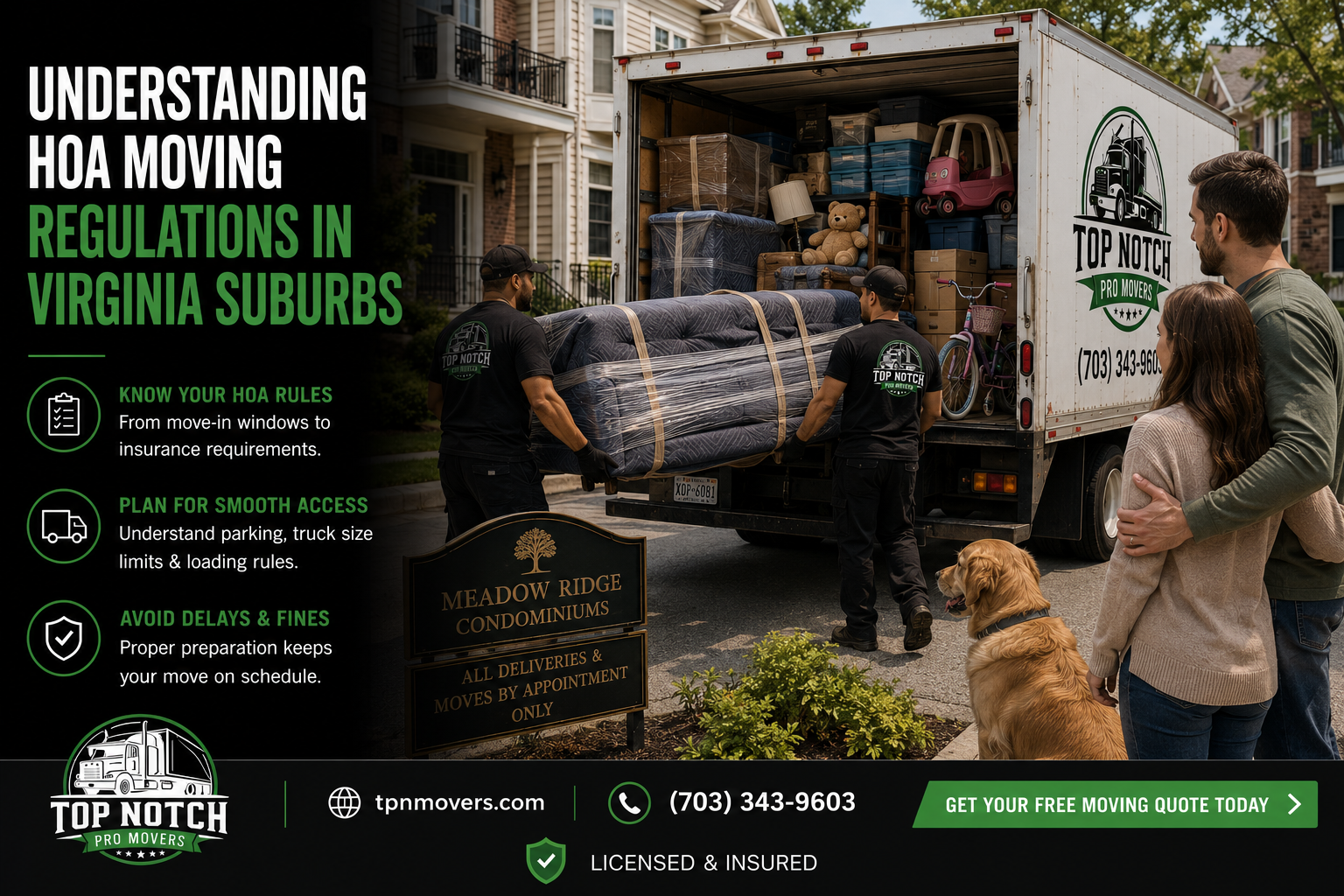
Alexandria’s parking restrictions and metered zones near commercial corridors mean move-in logistics deserve more planning here than in a typical suburban setting. Old Town in particular requires checking whether a temporary parking permit is needed for a moving truck, since curbside space along King Street and the surrounding blocks fills quickly. Buildings in Carlyle and Potomac Yard often have loading dock reservations similar to condo requirements found elsewhere in Northern Virginia, so confirming those details with a building manager ahead of time avoids a stalled move-in morning.
Practical Tips Before Choosing a Neighborhood
Test the actual commute at the time of day it would happen daily, not just during a weekend visit, since traffic patterns on Route 1 and Duke Street shift dramatically between a Tuesday morning and a Saturday afternoon. Walk a neighborhood on foot before committing, since Alexandria’s blocks can feel very different depending on time of day and season. Top Notch Pro Movers has found that residents who confirm parking and loading requirements with their specific building or HOA before move day, rather than assuming a truck can simply pull up curbside, tend to have noticeably smoother move-in experiences.
Frequently Asked Questions
Which Alexandria neighborhood has the easiest commute to D.C.?
Old Town and Del Ray both offer strong Metro access via the King Street–Old Town and Braddock Road stations, putting downtown D.C. within a relatively short ride on the Blue and Yellow lines.
Is parking difficult throughout Alexandria, or just in certain neighborhoods?
Parking pressure is most noticeable in Old Town, particularly on weekends near King Street and the waterfront. Neighborhoods like Seminary Hill and parts of the West End generally have less parking competition but require more car reliance overall.
Do I need a permit to park a moving truck in Old Town?
Many blocks in Old Town have metered or restricted parking, so it’s worth checking with the city or the building directly about temporary loading permits before move day, especially for weekend moves.
What’s the difference between living near Old Town versus Del Ray?
Old Town offers a denser, more tourist-oriented urban feel with waterfront access, while Del Ray has a quieter, community-centered atmosphere with more single-family homes and a well-known local shopping strip along Mount Vernon Avenue.
Are DASH buses a reliable alternative to driving in Alexandria?
DASH buses cover local routes well within the city’s core, but service becomes less frequent in western neighborhoods, so residents further from the Metro corridor often still need a car for daily errands.
Final Thoughts
Alexandria rewards residents who choose their neighborhood based on actual commute patterns rather than a general sense of the city’s charm. Comparing a local moving company in Virginia, a commercial moving company in Virginia, or a long-distance moving in Virginia option against the specific parking, permit, and building requirements of a chosen neighborhood tends to prevent the kind of move-day surprises that catch new residents off guard. Top Notch Pro Movers is one of several resources people in the area turn to while working through those neighborhood and logistics decisions ahead of a move.