
Every moving season, someone in the DC-Maryland-Virginia tri-state area books what looks like a great deal, hands over their belongings, and then gets a call demanding hundreds or thousands of dollars more before their furniture will be delivered. It’s not a rare story. It’s a pattern that federal regulators, consumer protection groups, and local police departments across the region see repeat itself with almost identical scripts every year.
The tri-state area’s mix of dense apartment turnover, a huge population of federal employees relocating on tight timelines, and constant demand for movers makes it an attractive market for legitimate companies and rogue operators alike. Anyone researching a local moving company in Virginia has probably noticed how many options come up in a basic search, and not all of them are what they claim to be. Knowing what separates a legitimate operation from a rogue one before you sign anything is the single best protection available, and it starts with understanding how these scams are actually built.
The Numbers Behind the Problem
This isn’t a fringe issue. The Better Business Bureau has reported receiving an average of roughly 13,000 complaints and negative reviews about moving companies each year, with a large share tied to interstate moves specifically. The Federal Motor Carrier Safety Administration received around 7,500 scam-related complaints in a single recent year, prompting the agency to launch nationwide enforcement sweeps aimed at movers and brokers who hold customers’ belongings hostage for additional, undisclosed fees. Consumer advocates also estimate that fewer than 10 percent of victims ever file a formal complaint, which means the real scale of the problem is almost certainly larger than the official numbers suggest. Within that broader complaint pool, roughly a quarter involve what’s known as a hostage load, where a mover refuses to unload a truck until the customer pays significantly more than the original quote.
How the Hostage Load Scam Actually Works
The pattern is consistent enough that it’s worth walking through step by step. A rogue mover advertises a quote well below the competition, often over the phone without ever seeing the home or inventory in person. Once the truck is loaded, the company suddenly claims the shipment weighs more, requires special handling, or was miscounted, and refuses to complete delivery until the customer agrees to pay the new, inflated price. Because the belongings are already gone, most people feel they have no choice but to pay. This tactic works precisely because it targets people mid-move, when they have the least leverage and the most urgency to get their possessions back.
Businesses aren’t immune either. A company vetting a commercial moving company in Virginia for an office relocation should apply the same scrutiny as an individual booking a household move, since scammers targeting businesses often chase larger invoices and count on procurement teams being less familiar with red flags than a homeowner who’s done more research.
Comparing a Legitimate Mover to a Rogue Operator
| Signal | Legitimate Moving Company | Rogue Mover or Broker |
|---|---|---|
| Estimate process | In-home or video survey before a binding quote | Phone-only quote, often unusually low |
| USDOT registration | Verifiable and displayed on trucks and paperwork | Missing, expired, or doesn’t match the company name |
| Deposit requirements | Small or no deposit before the move | Large upfront deposit demanded |
| Contract terms | Written, itemized, with a clear not-to-exceed price | Vague, verbal, or missing key details |
| Trucks and branding | Company-branded vehicles, consistent identity | Unmarked or rented trucks with no company signage |
| Behavior at delivery | Delivers per the original agreement | Demands more money before unloading |
Red Flags Worth Memorizing Before You Book
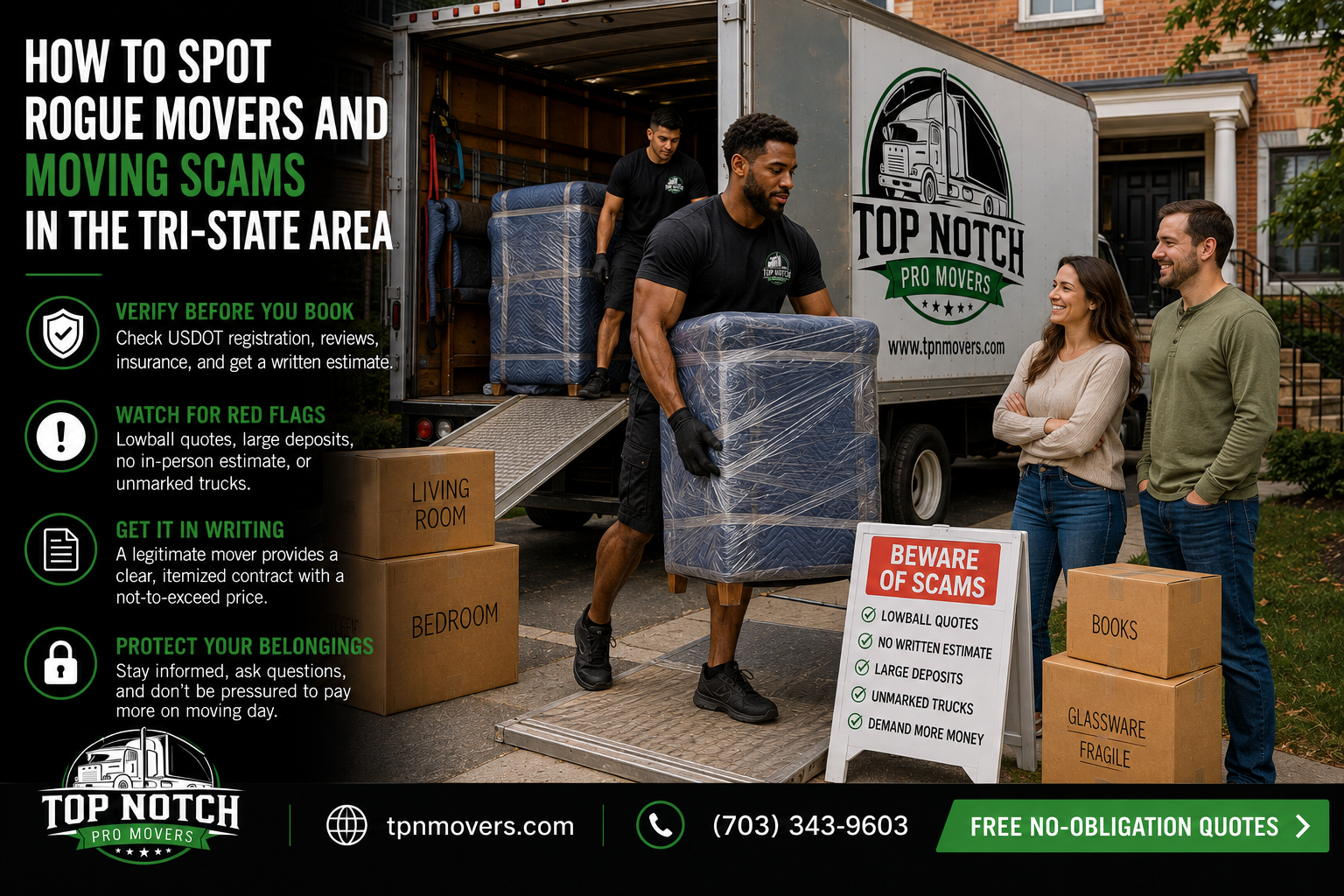
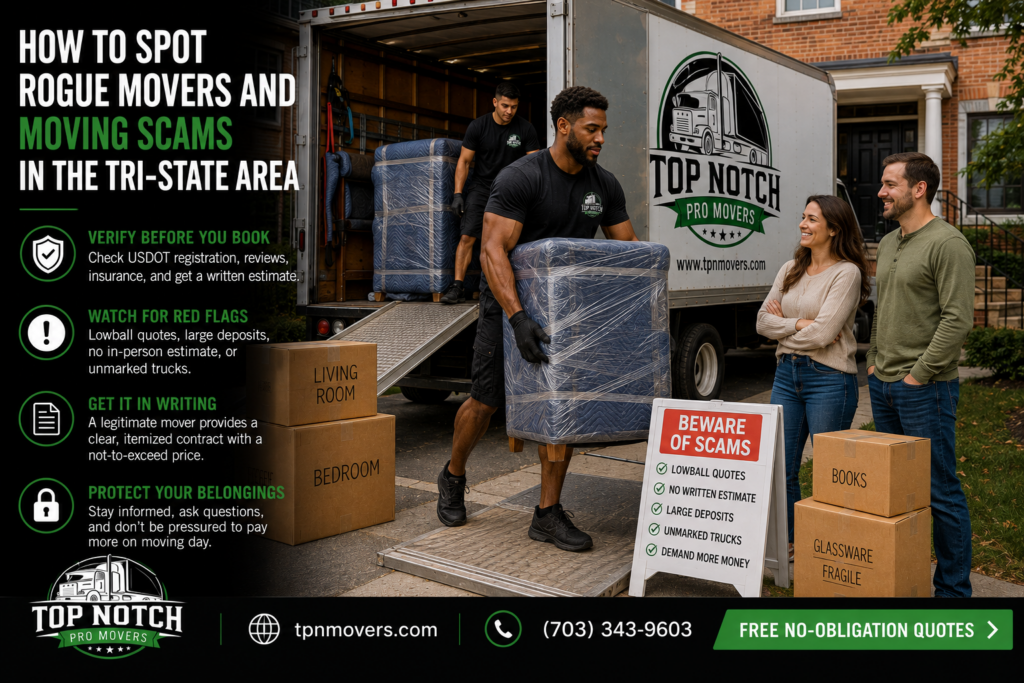
A few warning signs show up across nearly every rogue mover complaint on record. A quote that’s dramatically lower than every other estimate you’ve received is rarely a bargain; it’s usually the opening move in a hostage load setup. A company that refuses to provide a written, itemized estimate, or that pressures you to sign a contract immediately without reading it, is asking you to skip the one protection that actually matters. Reviews that only appear on the company’s own website, rather than independent platforms, are another common tell, since rogue operators frequently manufacture their own testimonials while burying real complaints elsewhere.
Interstate moves draw a disproportionate share of complaints, since the distance makes it harder for a customer to simply drive to a warehouse and demand their belongings back. Anyone arranging long distance moving in Virginia for an out-of-state relocation should treat the verification steps below as mandatory rather than optional, precisely because the leverage shifts so heavily toward the mover once a truck crosses state lines.
Verifying a Mover Before You Commit
Checking a company’s credentials takes a few minutes and can save thousands of dollars. Confirm the business is registered with the USDOT and that the number displayed matches the company name exactly, since some rogue operators borrow or fabricate registration numbers. Search for the company on independent review platforms rather than relying on testimonials posted to their own site, and look specifically for patterns of complaints about hidden fees, delayed delivery, or hostage situations rather than isolated one-off gripes. Get at least three written estimates so you have a realistic sense of the going rate for your move, and treat any quote that comes in dramatically below the others as a signal to investigate further rather than a stroke of luck.
Families relocating with a full household should confirm that residential movers in Virginia they’re considering can provide references and a physical office address, not just a phone number and a website.
Top Notch Pro Movers has seen firsthand how often these verification steps get skipped simply because a customer is short on time, which is usually the exact moment a rogue operator is counting on.
What to Do If You’re Already Being Held Hostage
If a mover is refusing to deliver your belongings without additional payment, document everything: the original contract, every communication, and the amount being demanded. Report the situation to the FMCSA and file a complaint with the Federal Trade Commission’s fraud reporting site, since both agencies track these patterns and can assist with enforcement. If you paid by credit card, contact your card issuer to dispute the charge as fraudulent. Local police can also file a report, which matters if you later pursue a civil judgment against the company.
Smaller Moves Carry Risk Too
It’s tempting to assume scams only target large interstate shipments, but rogue operators also target smaller jobs where people are less likely to do their homework. Someone hiring help for furniture moving in Virginia to move a single piece across town should apply the same scrutiny to credentials and reviews as someone booking a full household relocation. Scammers rely on the assumption that smaller jobs won’t get the same due diligence, and that assumption is often correct.
The same logic applies to labor only moving, where a customer rents their own truck and hires a crew just to load and unload. Because the customer retains control of the vehicle, this arrangement carries less risk of a hostage load, but it’s still worth confirming the crew is affiliated with a verifiable, insured company rather than an informal group found through an unvetted online listing.
Storage Situations Deserve the Same Scrutiny
Scams aren’t limited to the truck itself. Anyone arranging storage solutions as part of a move, particularly during a gap between lease dates, should confirm the facility is legitimate, insured, and accessible on the terms promised before handing over a deposit or a full month’s belongings. A storage arrangement tied to a mover with no verifiable address is exactly the kind of situation that turns into a dispute later.
The Bottom Line
Rogue movers succeed because moving day is stressful and time-sensitive, and scammers are counting on people being too rushed to check credentials or read a contract closely. A little research before booking, checking USDOT registration, reading independent reviews, getting a written estimate, and being skeptical of unusually low quotes closes off almost every angle these operators rely on. Top Notch Pro Movers and other established companies in the region are always available as a comparison point; the extra ten minutes it takes to verify a mover is the cheapest insurance policy in the entire moving process.
Frequently Asked Questions
1. What is a hostage load scam?
A hostage load happens when a moving company already has a customer’s belongings loaded onto a truck and then refuses to deliver them unless the customer agrees to pay significantly more than the originally quoted price.
2. How can I check if a moving company is legitimate before booking?
Verify the company’s USDOT registration matches its name exactly, read reviews on independent platforms rather than the company’s own website, and request a written, itemized estimate rather than relying on a verbal phone quote.
3. Why do scammers target people moving in the tri-state area specifically?
High-volume moving markets like the DC-Maryland-Virginia area attract both legitimate companies and rogue operators, since constant demand makes it easier for scam companies to blend in among genuine options.
4. What should I do if a mover is holding my belongings hostage for more money?
Document all communication and paperwork, report the company to the FMCSA and the FTC, dispute any credit card charges with your card issuer, and file a police report if the situation escalates.
5. Are small local moves less likely to involve scams than long-distance moves?
No. Rogue operators often target smaller jobs, like single-item deliveries or labor-only bookings, specifically because customers tend to apply less scrutiny to lower-cost moves than they would to a full household relocation.