
Sterling, Virginia, has become one of the more popular relocation destinations in Loudoun County over the past decade, and the numbers back that up. The median home value in Sterling currently sits around $630,000–$645,000, well above both the Loudoun County average and the national median, yet homes here still move fast — typically going under contract within 19 to 25 days of listing. That combination of steady demand and rapid turnover means anyone planning a move into or within Sterling needs to plan carefully, especially in neighborhoods like Cascades, Potomac Falls, and Countryside, which each have their own character, housing stock, and logistics to consider. Families relying on local movers in Sterling, VA often find that neighborhood layout, HOA rules, and building age all affect how a move gets scheduled and priced.
Before getting into the specifics of each neighborhood, it helps to understand what’s driving people to Sterling in the first place. Its position near Washington Dulles International Airport and the Route 28 technology corridor has made it a magnet for professionals working in the data center and aviation industries, while established school pipelines through Loudoun County Public Schools keep it attractive to families. Whether someone is coming from within the DC metro or relocating from out of state, working with an established company such as Top Notch Pro Movers can make the difference between a smooth transition and a stressful one, particularly given how tightly packed some of these communities are.
Why Sterling Keeps Attracting New Residents
Sterling isn’t a single, uniform community — it’s a patchwork of subdivisions built across four decades, from the older sections of Sterling Park to newer construction near Lowes Island. A few figures help explain the pull:
- The median household income in the Cascades area alone runs well above $120,000, reflecting the concentration of tech and government-adjacent employment nearby.
- Roughly 70–80% of homes in Sterling’s core neighborhoods are owner-occupied, a notably higher rate than the regional average, which says something about how long people tend to stay once they arrive.
- Average commute times hover around 30 minutes, largely driven by Route 28 and the Dulles Greenway.
These are long-term residents, not transient renters, which is worth knowing if you’re moving into a neighborhood where your new neighbors have likely been there for ten or fifteen years already.
Cascades: Established, Family-Oriented, and Densely Built
Cascades is one of the older planned communities in Sterling, with most homes constructed between 1970 and 1999, alongside newer construction filling in gaps closer to the present day. It’s a mix of single-family homes, townhomes, and mid-rise apartment buildings, and the median sale price has climbed steadily — from roughly $568,000 in 2020 to around $760,000 in 2026, according to recent resale data. That’s a meaningful jump in just six years, and it reflects both renovation activity and genuine demand.
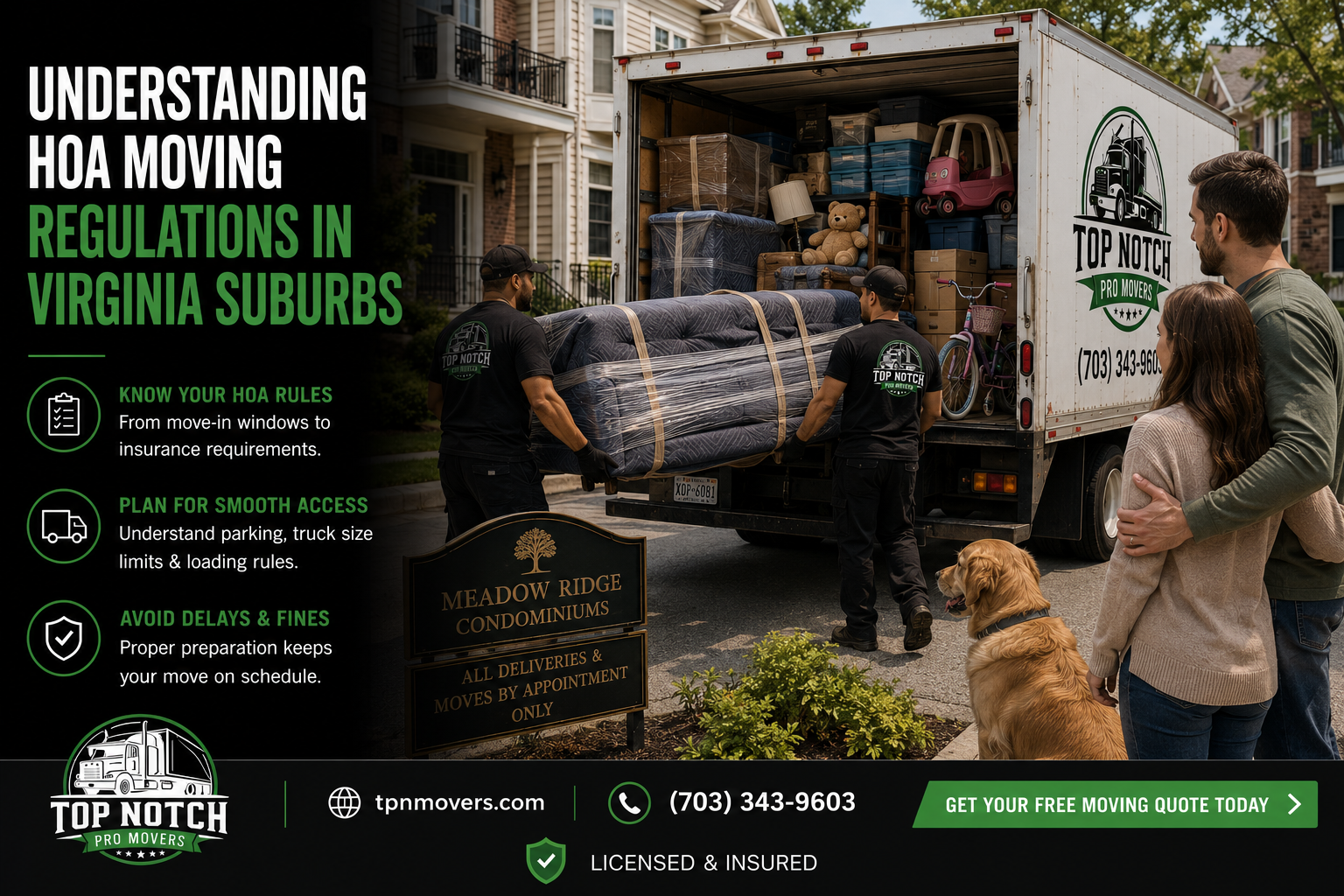
For movers, Cascades presents a specific challenge: many of the townhome clusters have narrow streets, shared driveways, and HOA restrictions on truck parking or move hours. Anyone relocating into a Cascades townhome should confirm move-in windows with the HOA well in advance, since some communities restrict large trucks to certain time blocks.
Potomac Falls: A Mix of Larger Lots and Newer Construction
Potomac Falls sits slightly north and west of Cascades and tends to feature larger single-family lots alongside newer townhome developments. It’s popular with families upgrading from a starter home, partly because of proximity to several well-rated elementary and middle schools. Homes here also tend to have more storage — attached garages and basements are more common than in the older Cascades sections — which changes the moving math. A three-bedroom single-family home with a garage and finished basement will usually take a larger crew and more hours than a comparable townhome without one, simply because there’s more square footage and more stairs involved.
Countryside: Sterling’s Original Suburban Core
Countryside is one of the oldest and most established neighborhoods in Sterling, built out primarily in the 1980s. It has a reputation for mature trees, larger yards relative to newer developments, and a strong sense of community continuity — many residents have lived there for decades. Because the housing stock is older, movers sometimes encounter narrower hallways, older HVAC units in inconvenient spots, and driveways not designed for oversized moving trucks. It’s a neighborhood where a pre-move walkthrough genuinely pays off.
Comparing the Three Neighborhoods
| Feature | Cascades | Potomac Falls | Countryside |
| Typical build era | 1970s–2000s | 1990s–2010s | 1980s |
| Housing mix | Townhomes, single-family, apartments | Single-family, newer townhomes | Single-family, some townhomes |
| Median home price (approx.) | $700K–$760K | $650K–$780K | $550K–$680K |
| Lot size | Small to medium | Medium to large | Medium |
| Moving considerations | Narrow streets, HOA rules on trucks | Garages/basements add volume | Older layouts, driveway access |
Numbers shift with the market, so treat these as directional rather than exact, but the pattern holds: older, denser communities like Cascades and Countryside tend to complicate truck access, while Potomac Falls’ newer construction generally offers more room to work with — but more total belongings to move.
What a Local Move in Sterling Typically Costs
Moving costs in the DC metro area run somewhat higher than the national average because of traffic density, parking restrictions, and labor rates. Based on industry-wide data for 2026, here’s roughly what to expect for a local move under 100 miles:
| Home Size | Typical Total Cost | Estimated Crew Time |
| Studio / 1 Bedroom | $400–$1,200 | 2–4 hours |
| 2 Bedroom | $800–$2,000 | 4–7 hours |
| 3 Bedroom | $1,200–$3,000 | 6–9 hours |
| 4+ Bedroom | $1,800–$4,500 | 8–12 hours |
Hourly labor rates in this region typically fall between $100 and $200 per hour for a crew of two to four movers, plus a travel fee that usually covers one hour of drive time each way. Homes with stairs, narrow hallways, or restricted parking — common in parts of Cascades and Countryside — often push actual hours toward the higher end of these ranges.
Planning Your Move: What Actually Matters
A few practical factors tend to matter more than people expect when relocating within or into Sterling.
Timing around the school calendar
Loudoun County Public Schools’ academic calendar drives a noticeable seasonal spike in local moves between late May and early September, which means both pricing and availability tighten during that window.
HOA and community rules
Nearly every neighborhood covered here — Cascades and Countryside especially — has an active homeowners association with rules governing move-in hours, truck size, and required notice. Skipping this step is one of the most common causes of move-day delays.
Parking and access
Streets in older sections of Countryside were laid out before large moving trucks were common, so confirming truck access ahead of time avoids a last-minute scramble to find alternate parking.
Utility and address transitions
Given how many residents in these neighborhoods have lived in the area for years, it’s easy to underestimate how many local service providers — HOA management, trash pickup, internet providers specific to Loudoun County — need to be updated separately from the standard USPS forwarding process.
Companies like Top Notch Pro Movers that regularly work in these specific neighborhoods tend to already know which streets in Countryside have tight turning radii or which Cascades sections restrict weekday truck parking, which can shave real time off move day. That kind of neighborhood-specific knowledge is genuinely useful in a market like this one, where three neighborhoods a few miles apart can have very different logistical quirks.
Frequently Asked Questions
Is Sterling, VA a good place to relocate to for families?
Sterling ranks well for families largely because of its schools and established neighborhoods. Loudoun County Public Schools is consistently rated among Virginia’s stronger districts, and communities like Potomac Falls and Cascades offer parks, pools, and walking trails that many newer developments elsewhere in the region don’t have yet.
How far in advance should I book movers for a Sterling relocation?
For a summer move — which is peak season in this market — booking four to six weeks ahead is a reasonable target. Off-peak moves in fall or winter can often be scheduled with two to three weeks’ notice, though weekends still fill up faster than weekdays.
Do HOA rules in Cascades or Countryside actually affect move day?
Yes, more than most people expect. Many HOAs in these neighborhoods restrict the hours large trucks can be on the street, require advance notice for elevator or loading dock use in condo buildings, and sometimes require a security deposit for common-area damage. Checking with the HOA before scheduling movers avoids surprises.
Which Sterling neighborhood has the most affordable homes right now?
Of the three covered here, Countryside generally has the lower end of the price range, partly reflecting its older housing stock, though renovated properties there can still command prices closer to Potomac Falls.
What should I budget beyond the mover’s quote?
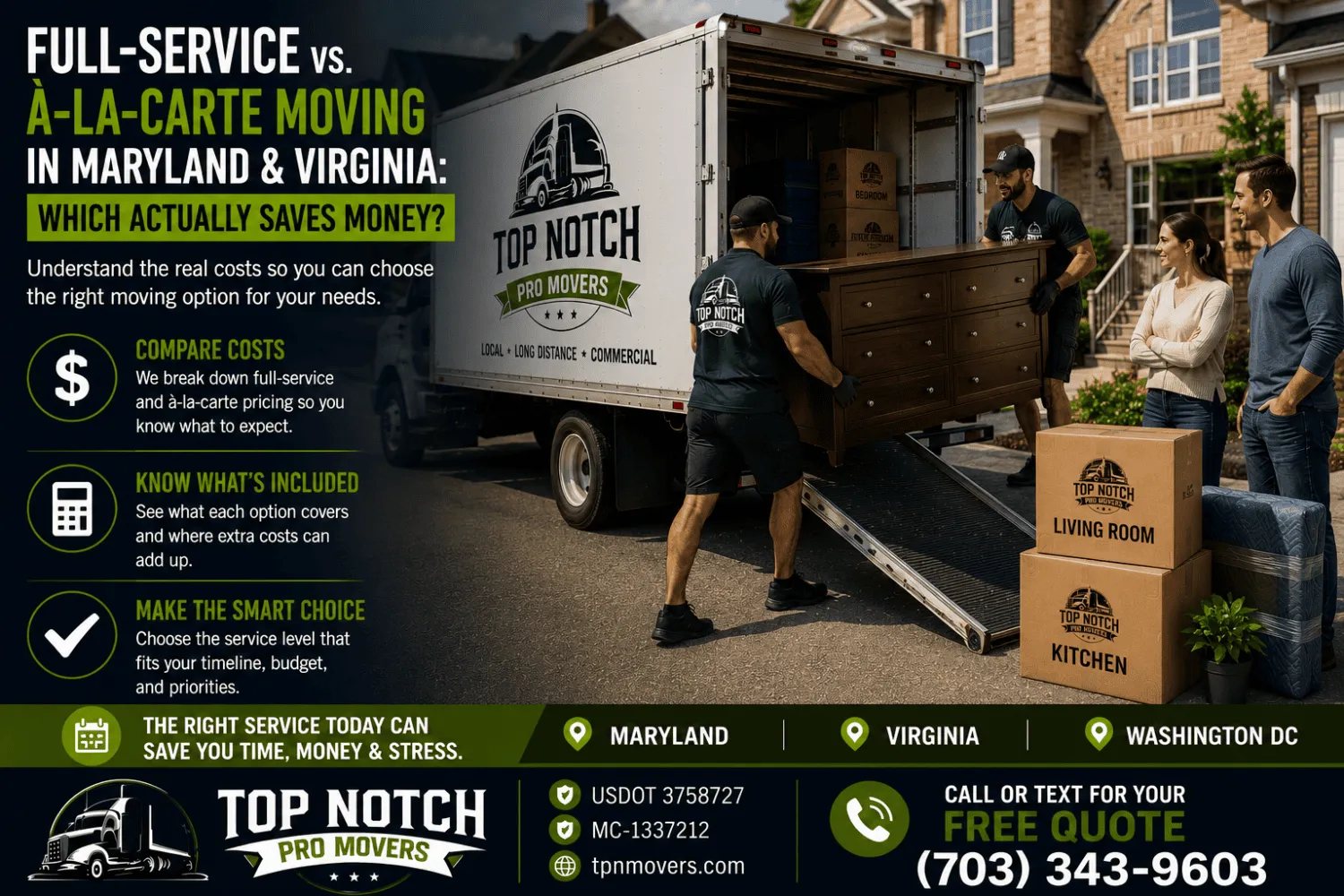
Beyond labor and truck fees, budget for packing materials, potential HOA move-in fees, tips for the crew, and a buffer for specialty items like pianos or safes, which usually carry separate flat fees. Full-service packing, if needed, typically adds several hundred dollars to the total.
Closing Thoughts
Relocating within Sterling — or into it from elsewhere in the DC metro — comes down to understanding the neighborhood you’re moving into as much as the move itself. Cascades, Potomac Falls, and Countryside each carry their own housing stock, HOA quirks, and access challenges, and factoring those in early tends to save both money and frustration on move day. For residents weighing their options, Top Notch Pro Movers’ familiarity with these specific communities is often what separates a straightforward move from a delayed one.