
Renting a truck and asking a few friends to help carry boxes feels like the budget-friendly way to move. On paper, the math looks simple: a rental truck for a day, some gas, maybe pizza for whoever shows up to help. In Washington DC, though, that simple math tends to fall apart somewhere around the second or third hour of moving day, once parking, permits, and building rules start adding line items nobody budgeted for.
This is not to say DIY moves never make sense. For a small studio with a few boxes and no large furniture, doing it yourself can absolutely be the cheaper option. But for most one and two-bedroom apartment moves in DC, the gap between the advertised cost of a DIY move and what it actually ends up costing is wider than most renters expect. A local moving company in Virginia often gets calls from DC renters who tried the DIY route first and ran into exactly this problem. The same hidden costs show up in different forms for businesses too, which is why a commercial moving company in Virginia typically builds permit and access planning directly into office relocation quotes from the start. And for anyone moving into DC from out of state, Long distance moving in Virginia services factor these same DC-specific costs into delivery day, since the truck still has to park somewhere once it arrives.
This article walks through where the hidden costs actually come from, using the kind of cost breakdown Top Notch Pro Movers shares with renters who are comparing their options before deciding how to handle a move.
The Truck Rental Price Tag Is Just the Starting Point
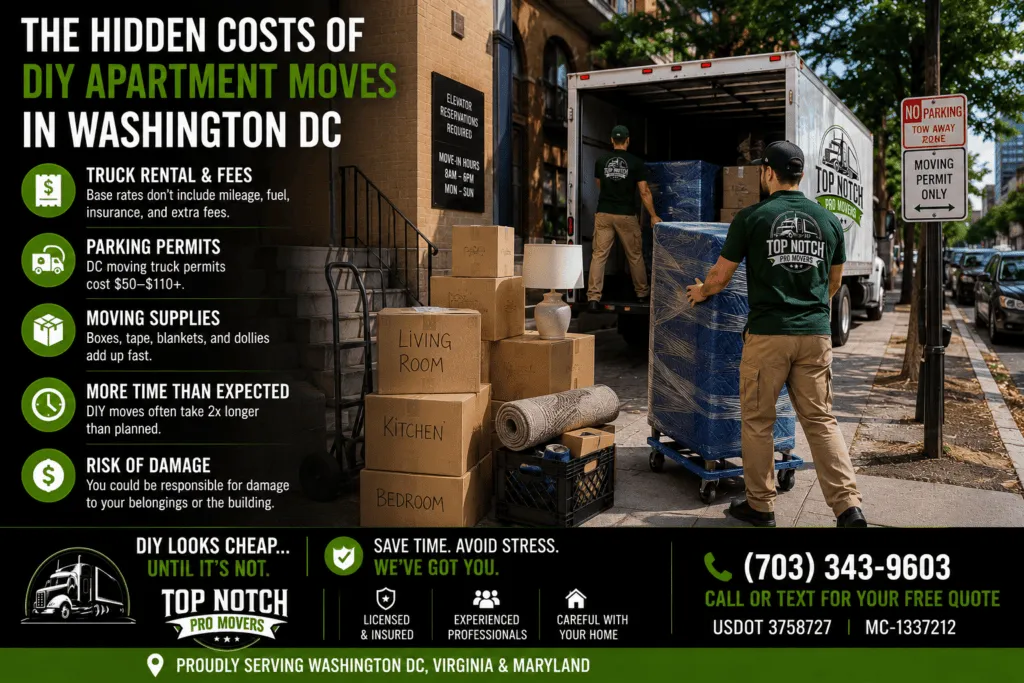
A one-day local truck rental in the DC area might be advertised at a flat rate that looks attractive at first glance. But that number rarely includes mileage charges, fuel, the environmental fee many rental companies add, or the cost of supplemental insurance if you do not already have coverage through a credit card or personal auto policy.
Then there is the question of how long the move actually takes. Renters consistently underestimate the time required to load a truck, drive across the city, find parking near the new building, and unload everything, especially if either building has stairs or a single elevator shared with other residents.
| Cost Category | Advertised DIY Estimate | Realistic DIY Total |
| Truck rental (one day) | Flat daily rate | Daily rate plus mileage and fuel surcharges |
| Insurance | Often assumed to be covered | Supplemental coverage may add 15 to 30 dollars per day |
| Moving supplies | Rarely included in initial estimate | Boxes, tape, blankets, dollies often run 50 to 150 dollars |
| Parking | Not considered | DC moving truck permits typically run 50 to 110 dollars |
| Time | One day | Often spills into a second day if anything goes wrong |
DC-Specific Costs That Catch Renters Off Guard
Washington DC has its own permitting system for moving trucks, run through the Department of Transportation’s online portal. For most apartment moves, a single truck requires reserving multiple parking spaces along the curb, and the permit fee for that reservation typically falls in the 50 to 110 dollar range depending on how many spaces and days are needed.
Renters who skip this step are not just risking a parking ticket. In many DC neighborhoods, particularly in dense areas like Dupont Circle, Adams Morgan, or Capitol Hill, there may simply be no legal place to park a 15 or 20-foot truck without a reservation, which means circling the block while friends wait inside with boxes, burning time that was supposed to be spent loading.
Building-specific rules add another layer. Many DC apartment buildings require advance notice for elevator use, a certificate of insurance from anyone doing the moving, including friends helping out in some buildings’ interpretations of the rule, and a defined move window. Showing up without having cleared this with the building’s front desk can mean being turned away entirely on moving day. When Top Notch Pro Movers books a job in one of these buildings, confirming these requirements ahead of time is typically one of the first steps, precisely because it is the kind of detail that catches DIY movers off guard.
Comparing Total Costs: DIY vs. Professional Movers in DC
When all of these pieces are added up, the comparison between DIY and professional movers looks different than the headline numbers suggest. The table below reflects general 2026 ranges for a typical one-bedroom apartment move within DC.
| Cost Element | DIY Move | Professional Movers |
| Base transportation | 100 to 150 dollars (truck rental) | Included in hourly or flat rate |
| Labor | Friends and family, often unpaid but with real time cost | 120 to 185 dollars per hour for a 2-person crew |
| Parking permit | 50 to 110 dollars if obtained | Often handled or factored in by the moving company |
| Supplies | 50 to 150 dollars | Often included or available as an add-on |
| Liability for damage | Personal responsibility, no coverage | Basic valuation coverage included |
| Typical total for a 1-bedroom | 350 to 600 dollars plus time and risk | Roughly 700 to 1,200 dollars all-in |
The gap narrows considerably once truck rental, permits, supplies, and a full day of unpaid labor from friends are factored into the DIY side. For larger apartments, the gap often closes entirely, since DIY moves tend to require a second trip or a larger, more expensive truck.
The Cost of Time and Lost Wages
One of the least visible costs of a DIY move is time, both yours and the people helping you. A DIY move that is estimated to take half a day frequently stretches into a full day once driving, parking, multiple elevator trips, and breaks are factored in. If you or your helpers are taking unpaid time off work to make this happen, that is a real cost even if it never shows up on a receipt.
Top Notch Pro Movers crews complete most one-bedroom apartment moves within DC in a few hours specifically because they have done the same building layouts before and know how to sequence loading to avoid wasted trips.
The Risk of Damage and Disputes With Building Management
Perhaps the most expensive hidden cost is the one that only shows up after the move: damage to the building itself. Scuffed elevator walls, dented door frames, or scratched hallway flooring can result in charges from the property management company, sometimes deducted directly from a security deposit.
Professional movers carry liability coverage and use protective equipment specifically to avoid these charges, and most DC buildings are familiar with working alongside licensed movers who already understand the building’s protection requirements. A renter doing it themselves does not have that same buffer, and disputes over who caused existing versus new damage can become a frustrating, drawn-out process.
Frequently Asked Questions
Is a DIY move actually cheaper for a studio apartment in DC?
For a small studio with minimal furniture, a DIY move can still come out cheaper, particularly if you already have a vehicle large enough or can borrow one. The math changes quickly once you add a bedroom set, a couch, or multiple flights of stairs.
Do I really need a parking permit to move in DC?
In most DC neighborhoods, yes. Without a reserved parking permit through the city’s online system, finding legal curb space for a moving truck can be difficult, and the fee is usually modest compared to the time lost circling for parking.
What happens if my apartment building does not allow my moving truck to park nearby?
This is more common than renters expect, especially in older buildings without dedicated loading areas. Some buildings require a separate loading dock reservation, and arriving without one can mean carrying items a much longer distance than planned.
Are friends helping with a move covered by any kind of insurance?
Generally no. If a friend is injured or damages property while helping you move, there is typically no insurance coverage in place, which is one of the less obvious risks of relying entirely on volunteer labor.
How far in advance should I apply for a DC moving truck permit?
It is best to apply at least a few business days before your move date, since processing times can vary and weekends or end-of-month dates tend to be in higher demand for both permits and parking spaces.