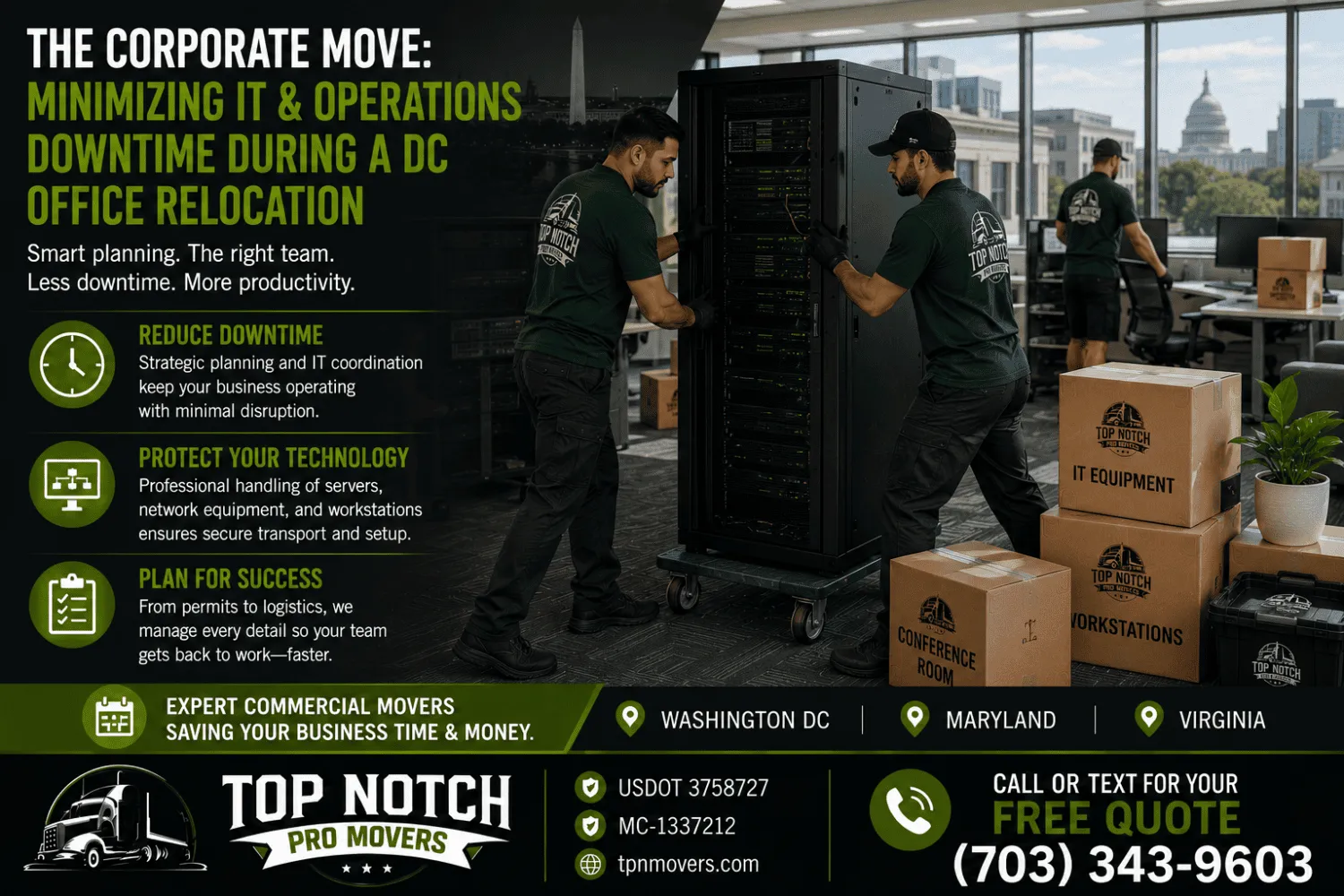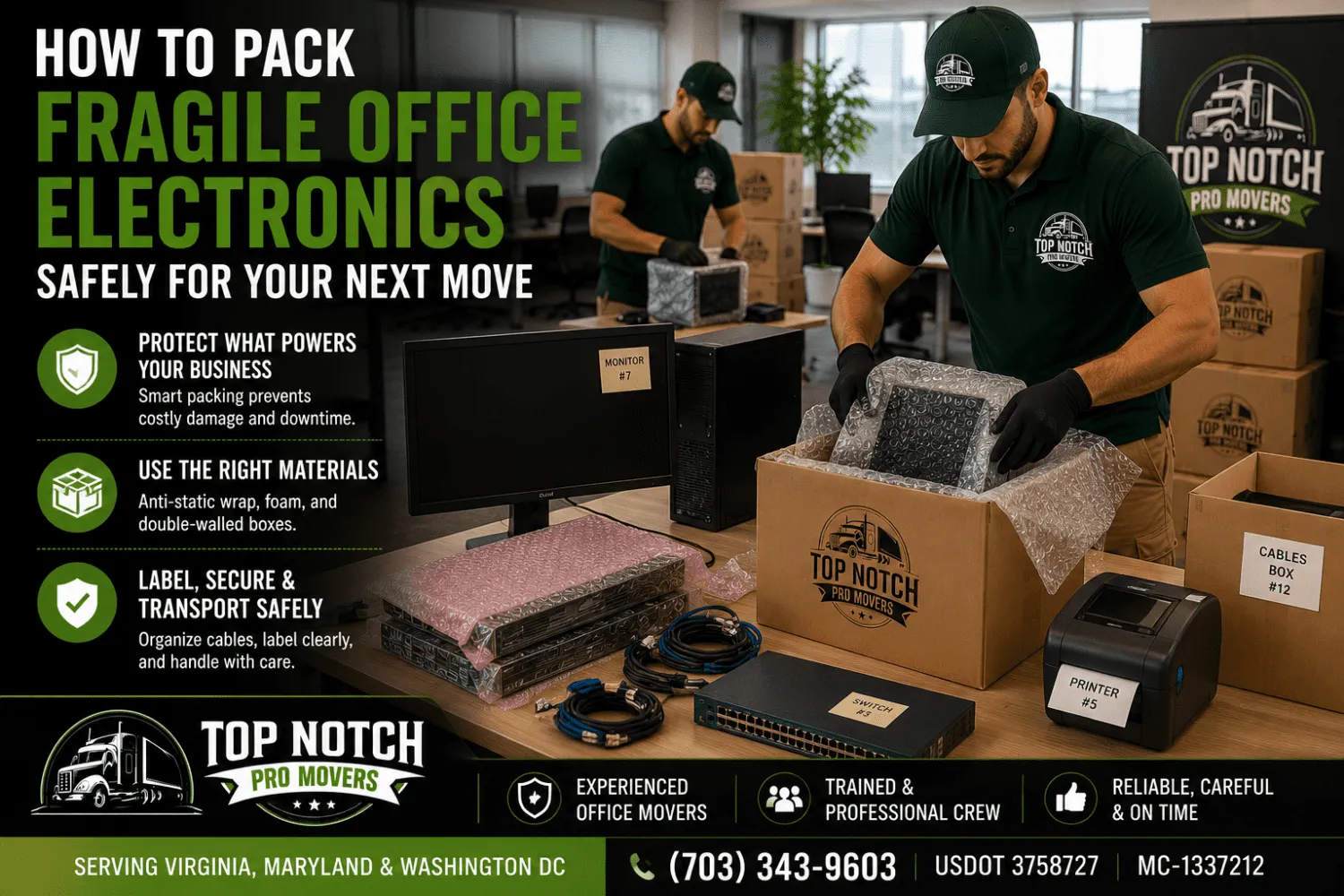


Packing is one of the most underestimated parts of any move. Most people focus on finding a truck or confirming a move date, and packing gets treated like an afterthought. That mindset can cost you. Whether you are working with a local moving company in Virginia or coordinating a cross-state transition through a long distance moving company in Virginia, the quality of your packing directly affects whether your belongings arrive intact.
According to the American Moving and Storage Association (AMSA), roughly 40 million Americans move each year, and claims related to damaged goods during transit are among the most common disputes between movers and customers. A significant share of those damages trace back to inadequate packing, not careless driving or poor handling. If you are also planning a business relocation, the stakes are even higher. Working with an experienced commercial moving company in Virginia means your office equipment, client files, and furniture need professional-grade protection from the first box packed to the last item unloaded.
Before you hand over your belongings to any packing crew, there are three areas you need to evaluate carefully: the materials they use, the timeline they propose, and the insurance coverage they provide. Here is what to look for.
1. Packing Materials: Not All Boxes Are Created Equal
When you hire a professional packing service, you are not just paying for labor. You are paying for expertise in selecting the right protective materials for each type of item in your home or office. Ask any prospective company exactly what materials they bring to the job and how they determine which to use.
Standard packing supplies include double-walled corrugated boxes, packing paper, bubble wrap, foam padding, wardrobe boxes with hanging bars, dish packs with cell dividers, and specialty crates for high-value items like artwork or antiques. A crew that shows up with single-wall boxes and minimal padding for a three-bedroom house is a red flag. The weight capacity and durability of the box must match the contents.
Here is a quick comparison of packing material quality levels you will encounter across different service tiers:
| Material Type | Budget Service | Standard Service | Premium Service |
| Moving Boxes | Single-wall | Double-wall | Heavy-duty double-wall |
| Fragile Item Wrap | Newspaper | Packing paper | Bubble wrap + foam |
| Dish Protection | Shared box | Cell dividers | Dish pack + cushioning |
| Clothing/Linens | Plastic bags | Standard boxes | Wardrobe boxes |
| Electronics | Unpadded | Foam corners | Custom foam inserts |
| Art / Antiques | Not handled | Bubble wrap | Custom crating |
Ask whether materials are included in the quoted price or billed separately. Some companies quote a low labor rate and then charge per box and per roll of tape, which inflates the final invoice considerably. Get a written itemization before any work begins.
You should also ask how the crew determines when a specialty container is needed. For example, a properly trained packer will automatically use a dish pack for ceramics and a mirror carton for framed glass. If the answer is vague or dependent entirely on customer request, that is a sign of inexperience.
2. Timeline: Why Scheduling Matters More Than You Think
Packing timelines are frequently miscalculated, and the consequences run downstream through the entire move. When packing takes longer than expected, it delays loading, pushes back the truck departure, and can cause you to miss building elevator reservations, closing windows, or storage unit access hours.
According to research compiled by moving industry analysts, the average time required to pack a home by room type breaks down as follows:
| Room Type | DIY Estimate | Pro Crew (2) | Pro Crew (3+) |
| Kitchen (standard) | 6 to 10 hours | 2 to 3 hours | 1.5 to 2 hours |
| Master Bedroom | 4 to 6 hours | 1.5 to 2 hours | 1 to 1.5 hours |
| Living Room | 3 to 5 hours | 1 to 2 hours | 45 to 90 mins |
| Home Office | 3 to 5 hours | 1 to 2 hours | 45 to 90 mins |
| Full 3-BR Home | 2 to 3 days | 6 to 9 hours | 4 to 6 hours |
When evaluating a packing company, ask them how they build their crew size estimate. A reputable crew lead will do a walk through, either in person or via video call, before quoting a timeline. If a company quotes you a packing time without ever seeing the volume of your home, treat that estimate with skepticism.
Also confirm whether the same crew handles both packing and loading. Some operations split these functions, which introduces a hand off risk. If the packing crew departs before loading begins and something is not adequately secured, accountability becomes murky.
Virginia summers bring heavy moving traffic, particularly in the Northern Virginia corridor and in the Hampton Roads region where military PCS (Permanent Change of Station) moves are frequent. The U.S. Department of Defense reports that Virginia is among the top five states for military relocation volume. This seasonal demand can compress available packing crew windows during June, July, and August. Book early and confirm your date in writing.
3. Insurance and Liability: Read the Fine Print Before You Sign
This is the area where most homeowners make their most costly mistake. Many assume that hiring a licensed moving company means their belongings are fully covered against any loss or damage. That assumption is wrong in most cases.
Federal law requires interstate movers to offer two levels of liability protection. Virginia intrastate movers are regulated by the Virginia Department of Motor Vehicles (VADMV) and must comply with state-specific requirements, but the same basic coverage framework applies.
| Coverage Type | Cost to You | Reimbursement Basis | Best For |
| Released Value (Basic) | Free (required by law) | $0.60 per lb per item | Low-value household goods |
| Full Value Protection | Additional fee | Repair, replace, or cash value | Electronics, antiques, art |
| Third-Party Insurance | Purchased separately | Varies by policy | High-value moves |
| Homeowners / Renters Policy | Part of existing policy | Varies by policy terms | Items excluded by mover |
Released Value Protection is the default if you do not opt into Full Value Protection. Under released value, a 60-pound flat-screen television that gets destroyed is worth $36.00 to the mover regardless of its actual replacement cost. That is the extent of their liability unless you select a higher protection level.
Before booking, ask the company the following questions specifically about their insurance structure. First, is Full Value Protection available and what does it cost? Second, are there declared value caps or item exclusions? Third, does packing by owner versus packing by crew affect your claim eligibility? Fourth, what is the claims filing deadline and process?
Many policies contain a provision that limits or voids coverage for items packed by the owner rather than the crew. If you pack a box yourself and something inside breaks, the mover may deny the claim entirely. This is a common and legitimate contractual position, but one you need to understand before you start packing anything on your own.
What to Expect From a Qualified Packing Service in Virginia?
Top Notch Pro Movers operates across Virginia with a crew-led approach that begins with a proper pre-move assessment. Before any box is packed, the team reviews your inventory, identifies specialty items, and builds a material list matched to what your home or office actually contains. That process eliminates the common problem of running out of proper supplies mid-job.
On the timeline side, Top Notch Pro Movers coordinates packing and loading as a single continuous operation rather than two disconnected stages. This approach reduces idle time on move day and gives you a tighter window on delivery timing, which matters whether you are moving across town in Stafford County or relocating a business operation in Fredericksburg.
Regarding insurance, Top Notch Pro Movers presents coverage options in plain language before any contract is signed. Customers are walked through what released value actually means in dollar terms for their specific inventory, and Full Value Protection is presented as a clear add-on with transparent pricing. That kind of upfront conversation is what separates professional operations from companies that bury the fine print.
Pre-Booking Checklist: Questions to Ask Any Packing Company
Before signing any packing service agreement, run through this checklist with the company representative:
- Will you do a walk through or video assessment before providing a quote?
- What packing materials are included in the price and what costs extra?
- How do you handle high-value items such as art, electronics, or antiques?
- How many crew members will be assigned and what is the projected completion time?
- What liability coverage is included and what are the upgrade options?
- Does owner-packed box coverage differ from crew-packed coverage under your policy?
- Are the same crew members responsible for both packing and loading?
- What is the claims process if something is damaged and what is the filing deadline?
Frequently Asked Questions
1. How far in advance should I book packing services in Virginia?
For moves during peak season, which runs from May through August, booking four to six weeks in advance is advisable. Virginia sees heavy moving activity due to its concentration of military installations and federal government employment. For moves in the fall or winter, two to three weeks is generally sufficient, though booking earlier always gives you more flexibility on crew size and scheduling.
2. Is it worth paying for full-service packing or should I pack some things myself?
For items you value highly, full professional packing is worth every dollar. The primary reason is insurance eligibility. Most moving company liability policies provide significantly stronger coverage when the crew does the packing. If you pack your own boxes and something breaks, your claim may be denied regardless of how carefully you packed it. Reserve self-packing for items you are comfortable replacing at full out-of-pocket cost.
3. What is the difference between released value protection and full value protection in Virginia?
Released value protection is the legally required minimum and costs you nothing, but it only covers $0.60 per pound per item. On a standard laptop weighing five pounds, that translates to a $3.00 reimbursement. Full value protection covers the actual repair or replacement cost of damaged items, which is the coverage level that makes sense for any move involving electronics, appliances, or furniture with meaningful replacement value.
4. Can I supply my own packing materials to save money?
Technically yes, but most professional packing crews will work best with materials they are familiar with and can stand behind. If you supply substandard boxes and something breaks, the company’s liability exposure is reduced because the failure can be attributed to your materials. If you want to cut costs, ask about the company’s own bulk pricing on supplies, since most buy at volume discounts and can pass some of that savings along when you ask directly.
5. Do packing services cover specialty items like pianos, safes, or pool tables?
Standard packing services typically do not include specialty items that require disassembly or custom crating. Pianos, gun safes, pool tables, and large aquariums generally fall under a separate service category with separate pricing. Ask specifically about any items in your home that fall into this category when you request a quote. Trying to treat these items as standard moves mid-job creates delays, liability disputes, and potential damage.
Final Thoughts
Booking packing services in Virginia is not complicated, but it does require asking the right questions before you commit. Materials quality, crew timeline accuracy, and insurance transparency are the three pillars that separate a smooth move from an expensive headache. Take the time to verify all three with any company you consider, and get the specifics in writing before anything is packed.