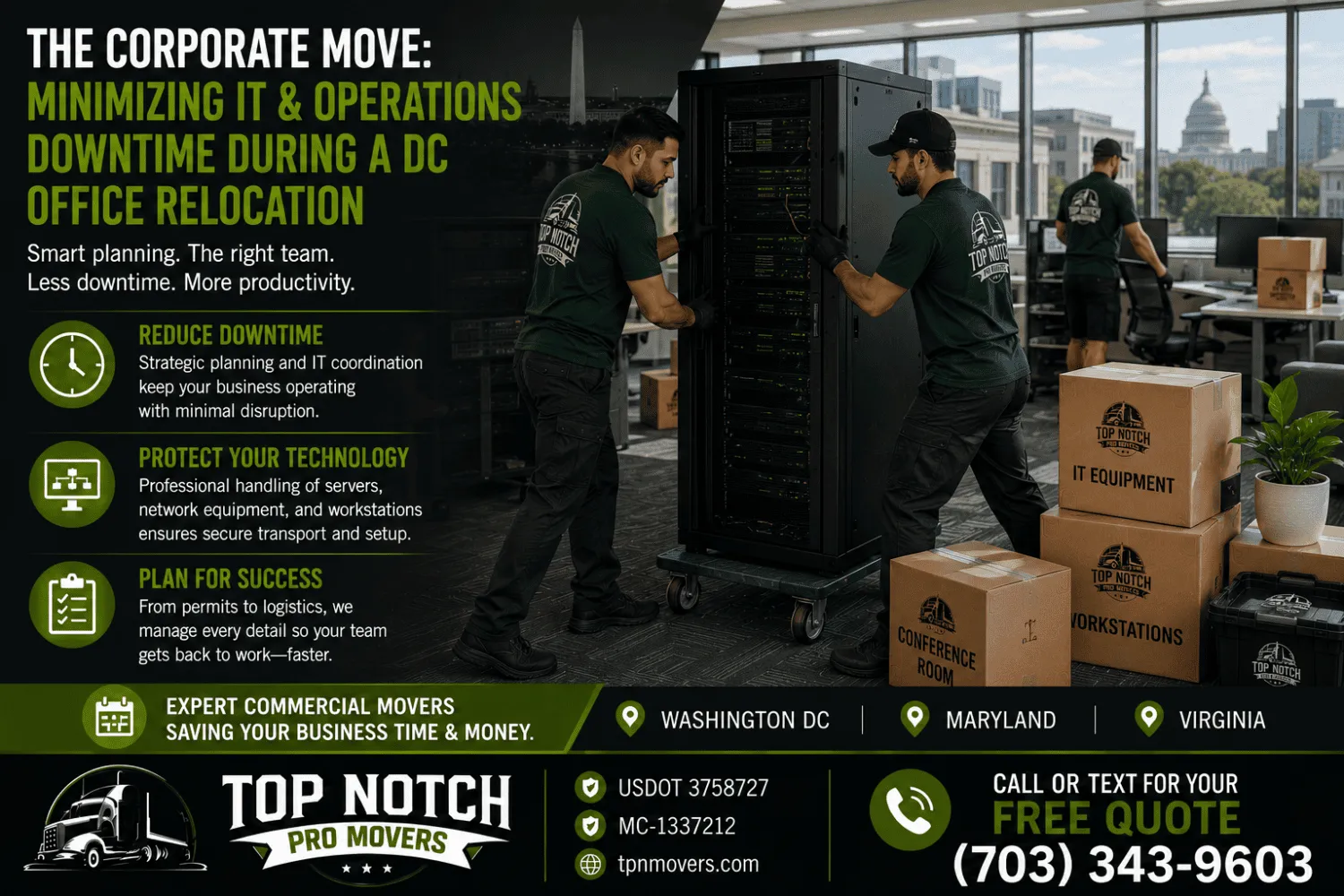


Moving an office is never just about loading boxes onto a truck. It is about keeping a business operational while desks, servers, files, and dozens of employees shift from one address to another, often over a single weekend. In a market as busy as Washington DC and Maryland, where commercial space is competitive and downtime translates directly into lost revenue, the moving partner you choose can make or break the transition.
At Top Notch Pro Movers, we have managed office relocations of every size across the DMV area, and our work also extends to clients who need local movers in Virginia, reliable residential moving in Virginia, dependable commercial moving services in Virginia, and experienced long distance movers in Virginia. That range gives us a clear view of what genuinely separates a trustworthy crew from a stressful and expensive mistake. Use the points below to compare your options the right way.
Start With Licensing and Insurance
Before you look at price, look at paperwork. A legitimate commercial mover should hold the proper state and federal credentials and carry adequate insurance, including general liability and workers’ compensation. This protects your business if equipment is damaged or someone is injured on your property during the move. Ask each company for proof, not promises. Any reputable office moving company will hand it over without hesitation. If a mover gets vague when you ask about coverage, treat that as your answer and move on.
Weigh Their Commercial Experience Specifically
Residential and commercial moves are different animals. A crew that excels at moving a three-bedroom house may struggle with a fifty-person office, a server room, or a stack of compliance-sensitive files. When comparing companies, ask how many office relocations they have completed in the past year and request references from businesses similar to yours in size and industry. Experience with cubicles, conference setups, IT disconnection and reconnection, and after-hours scheduling tells you far more than a polished website ever will.
Demand Transparent, Written Pricing
The fastest way to get burned on an office move is to accept a verbal estimate. Strong companies in DC and Maryland provide a written, itemized quote after either an in-person or virtual walk through of your space. That quote should spell out labor, materials, transportation, and any specialty handling fees. Be cautious of bids that come in dramatically lower than the rest. A low ball number often hides charges that surface on moving day, when you have no leverage to negotiate. Clear pricing is a sign of a company that respects your budget and your time.
Read Reviews, Then Verify References
Online reviews are a useful starting point, but they are only part of the picture. Look for patterns rather than individual ratings. Do customers consistently mention punctuality, careful handling, and clear communication? Are complaints answered professionally or ignored entirely? After reviewing public feedback, ask the company for two or three direct references from recent commercial clients and actually call them. A five-minute conversation with a past customer will reveal more than fifty stars ever could.
Ask About Project Management and Timeline
A good office move runs on a plan, not improvisation. Find out whether the company assigns a dedicated coordinator or project manager to your relocation. This person becomes your single point of contact, handling scheduling, labeling systems, floor plans, and any surprises along the way. You should also confirm how they handle timing. Many DC and Maryland businesses move over weekends or after hours to avoid disrupting operations, so make sure the company can work around your schedule rather than forcing you to work around theirs.
Confirm How They Handle Technology and Specialty Items
Offices are full of items that need more than muscle. Servers, printers, monitors, medical or laboratory equipment, and important records all require careful handling. Ask each company how they pack, label, and transport sensitive technology, and whether they coordinate with your IT team for disconnection and setup. The right partner will have a clear, practiced process. The wrong one will improvise, and improvisation is where expensive accidents happen.
Compare Quotes the Right Way
Once you have two or three written estimates, line them up side by side and compare what is actually included, not just the bottom-line number. One quote may include packing materials and insurance while another tacks them on later. Look at scope, protections, and the company’s responsiveness throughout the process. The mover who answers your questions quickly and clearly during the quoting stage is usually the same one who shows up on time and finishes the job without drama.
The Bottom Line
Comparing office moving companies in DC and Maryland comes down to credentials, commercial experience, honest pricing, real references, and a solid plan. Take the time to vet each option against these standards, and you will avoid the common headaches that derail business relocations. When you are ready for a partner who treats your move with the seriousness it deserves, Top Notch Pro Movers is here to help you plan it, price it honestly, and execute it cleanly.
Frequently Asked Questions
How far in advance should I book an office move in DC or Maryland?
For most businesses, six to eight weeks is a safe window. Larger offices or moves that require weekend and after-hours scheduling should be booked even earlier, since the best crews fill their calendars quickly in this region.
How much does a commercial office move typically cost?
Cost depends on the size of your office, the distance, and any specialty items such as servers or heavy equipment. The only accurate way to know is a written, itemized estimate based on a walk through of your space, which Top Notch Pro Movers provides at no cost.
Can the move happen over a weekend to avoid downtime?
Yes. Many DC and Maryland businesses prefer weekend or evening moves to keep operations running. A capable commercial mover will build the schedule around your business hours, not the other way around.
Will the moving company handle disconnecting and reconnecting technology?
Many full-service movers coordinate with your IT team or offer technology handling as part of the package. Always confirm this during the quoting stage so there are no surprises on moving day.
What should I confirm before signing a contract?
Verify licensing, insurance coverage, a written itemized estimate, the assigned point of contact, and the agreed timeline. Getting these in writing protects your business and sets clear expectations on both sides.